

Reviewed 28 August 2026. Sources checked 2 September 2026.
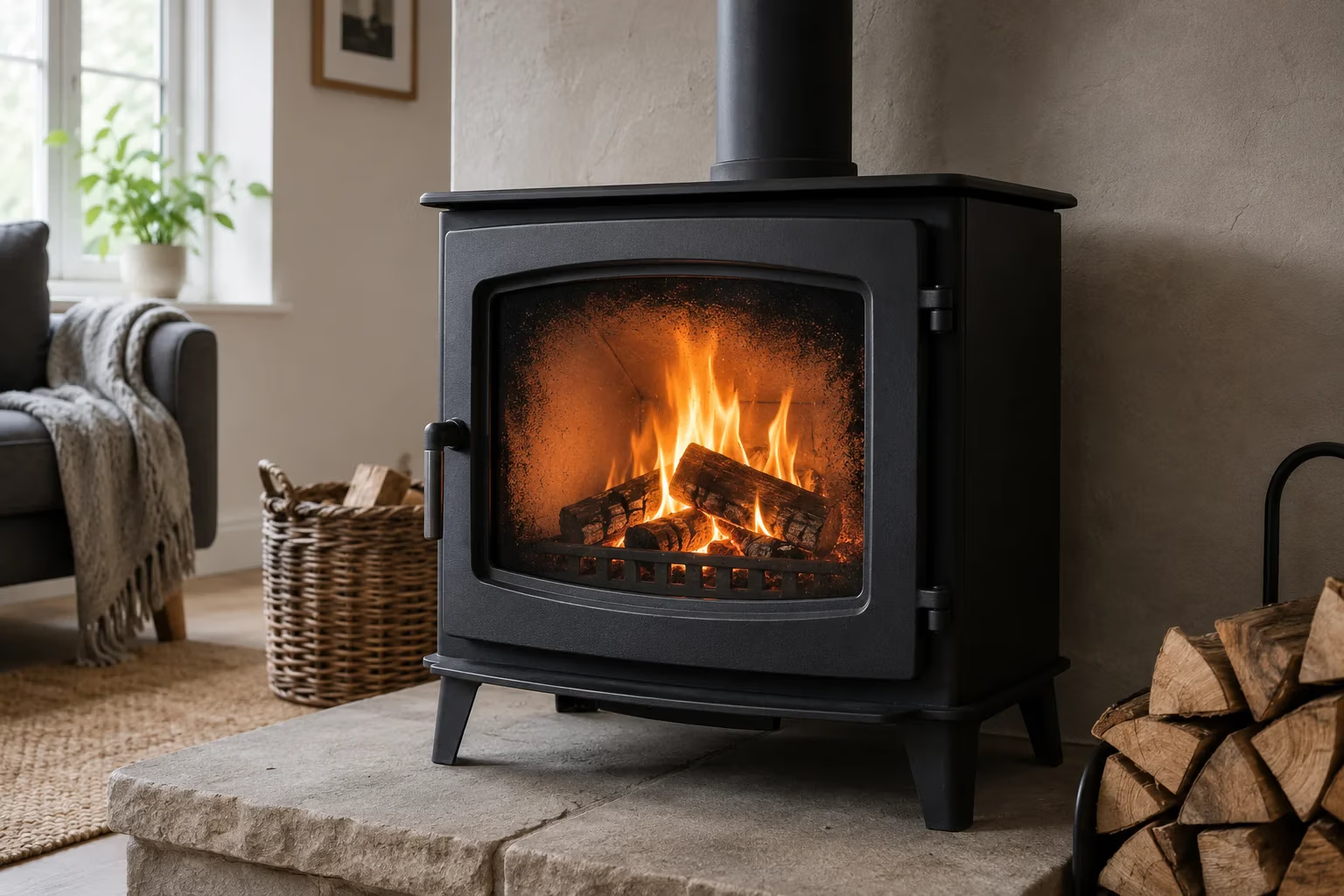
The short answer: stove glass turns black when smoke and unburnt particles condense on the cooler glass instead of burning away. The most common reasons are damp wood, running the stove too slowly, closing the air controls too early, poor airflow or draught, and logs touching or sitting too close to the glass. Black glass is usually a sign the fire is not burning cleanly enough, not that the glass itself is faulty.
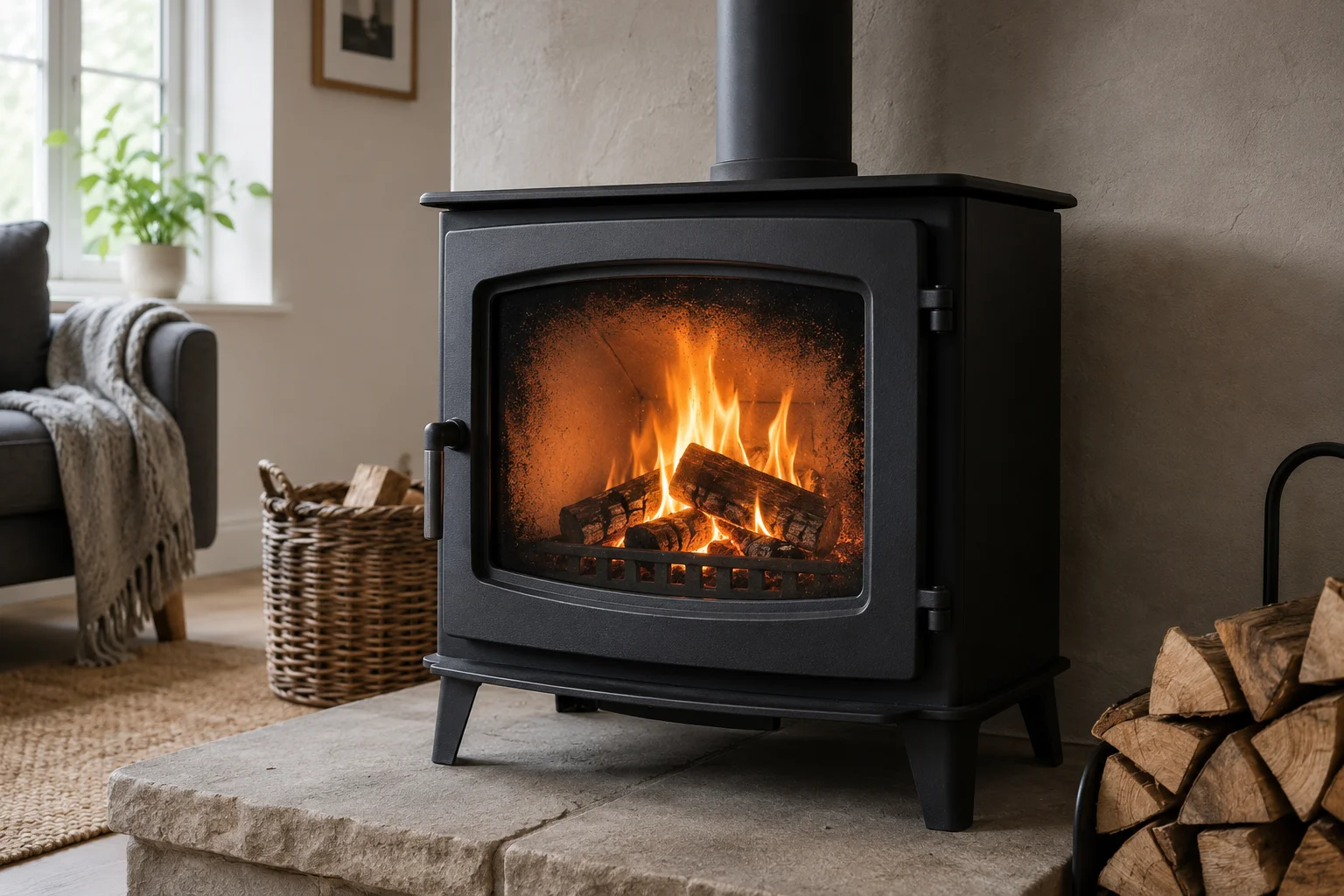
Is black stove glass normal?
A light haze during lighting or shortly after adding a new log can happen, particularly while the stove and chimney are still warming up. On a correctly operated modern stove, much of that light deposit may clear once the fire reaches its proper operating temperature and the airwash is working.
What is not normal is glass that becomes heavily black every time you use the stove, stays black across most of the window, or suddenly starts sooting when it used to remain clear. That is the stove telling you something has changed. The fuel may be wetter, the fire may be starved of air, or the appliance and flue may need attention.
What actually makes the glass go black?
The black coating is normally soot or tarry combustion residue. Wood does not burn cleanly just because it is alight. It needs sufficiently dry fuel, enough oxygen, a hot enough firebox and a chimney that creates the correct draught. If one of those is missing, combustion becomes incomplete and more smoke is produced. Some of that smoke then settles on the glass. HETAS covers the basics in its tips for keeping stove glass clean. If your stove also smokes into the room when you light it, that has its own causes, covered in our guide to why a wood burning stove smokes when you light it.
The most common causes of black stove glass
1. Burning wet or poorly seasoned wood
This is the first thing to check. Wet wood uses a large part of the fire’s energy simply driving off water. That keeps the firebox cooler and produces more smoke, particles and tar. The result is less useful heat, dirtier glass and more deposits in the appliance and chimney.
For domestic burning, dry wood means a moisture content of 20 percent or less. In England, wood sold in volumes below 2 cubic metres with the Ready to Burn logo is certified at 20 percent moisture or below (GOV.UK guidance on selling wood for domestic use). If you season your own logs, test a freshly split face with a calibrated moisture meter, as Woodsure explains. Testing only the dry outside surface gives a misleading reading. Defra’s Burn Better, Breathe Better guidance covers the wider picture.
2. Slumbering the stove or running it too cool
A wood burner is not at its cleanest when it is shut down until the flames barely move. Leaving it at a low output for long periods, often called slumbering, can starve the fire of oxygen and lower the chimney temperature. HETAS warns that prolonged low output burning can cause incomplete combustion, increased soot and creosote, and higher carbon monoxide and particulate emissions.
This often happens when a stove is too large for the room. The room gets hot, so the owner turns the air almost fully down. A correctly sized stove is easier to run at a steady, active burn without cooking everyone out of the lounge. Our guide to choosing a wood burning stove explains how to get the size right.
3. Closing the air controls too soon
Most modern stoves use an airwash: a controlled flow of air passes down or across the inside of the glass and helps keep smoke particles away from it (Stovax explains how airwash works). The exact control positions vary by stove, which is why the operating manual matters.
If the air is reduced before the firebed and chimney are properly hot, the airwash may not work effectively and the new load can smoulder. The same can happen after refuelling if the new logs are not allowed to catch properly before the control is turned down again. Aim for a steady, active flame, then adjust the controls exactly as the manufacturer instructs. Do not copy another stove owner’s settings and assume they apply to yours.
4. Logs are touching the glass or the stove is overloaded
A log resting against the window creates a cold, smoky area immediately beside the glass. It can leave a stubborn black patch and may also place unnecessary stress on the ceramic panel. Overloading the firebox can obstruct the intended airflow and push fuel too close to the door. Keep the logs behind the firebars or log guard, leave room around the fuel for air to move and use the log size and refuelling quantity stated in the appliance manual. More wood is not automatically a better fire. Charnwood’s cleaning advice makes the same point.
5. Poor chimney draught or restricted ventilation
The chimney provides the pull that moves combustion air through the stove and carries the products of combustion away. A cold flue can draw poorly during lighting. A partially blocked flue, an unsuitable chimney, downdraught, inadequate permanent ventilation or strong extractor fans can also interfere with the intended airflow.
Do not try to diagnose or alter a flue by guesswork. If the glass blackens rapidly despite dry wood and correct operation, or if smoke enters the room, stop using the appliance and arrange an inspection by a competent stove professional or chimney sweep. A carbon monoxide alarm is essential protection, but it is not a substitute for fixing the cause.
6. The stove needs sweeping, servicing or a component checked
Repeated blackening can also point to maintenance issues: a restricted air passage, worn or displaced door rope, damaged baffle, blocked chimney, or a problem with the airwash system. HETAS recommends an annual stove service and says chimneys serving wood burning appliances should generally be swept at least twice a year, with frequency adjusted to use and professional advice. Our guide to chimney sweeping in Warrington explains what a sweep involves.
What the pattern on the glass may be telling you
| What you can see | Possible explanation to check |
|---|---|
| Light haze during lighting that later clears | The stove and flue were cold. The deposit may burn away once the appliance reaches operating temperature |
| Black patch where a log was leaning forward | Fuel was too close to or touching the glass |
| Whole window turns black during a slow burn | The fire may be too cool, slumbering or short of combustion air |
| Glass blackens even with dry wood and active flames | Airwash, draught, ventilation, maintenance or installation may need checking |
| Blackening has suddenly become much worse | Look for a change in fuel, control use, weather and draught, sweeping condition or stove components |
These are clues, not a remote diagnosis. The appliance manual and an on site inspection take priority.
How to prevent your stove glass turning black
- Burn only dry wood at 20 percent moisture content or below. Look for Ready to Burn fuel, or test home seasoned wood on a freshly split face
- Store logs off the ground and protected from rain, with airflow around them. Certified dry wood can become wet again if it is stored badly
- Light the fire briskly and allow the stove and chimney to warm up. Follow the manufacturer’s lighting method and control settings
- Keep a steady, active flame. Reduce the heat by using a smaller fuel load rather than starving a large load of air
- Avoid prolonged slumbering. Do not leave a wood fire smouldering overnight unless the appliance instructions specifically permit it
- After refuelling, allow the new logs to catch properly before reducing the air. Never leave the door open as a way of extracting more heat
- Keep logs back from the glass and do not overfill the firebox
- Sweep the chimney and service the stove at the recommended intervals. Investigate a sudden or persistent change instead of simply cleaning the evidence away
A useful rule of thumb: use less dry wood and burn it properly, rather than filling the stove and shutting the air down. The exact fuel load and control positions must still come from your stove manual.
Does the type of wood matter?
Moisture content and how the fire is operated usually matter more than whether the log is hardwood or softwood. Properly dried softwood can burn cleanly, although it may burn more quickly. Damp hardwood is still damp wood and can blacken the glass just as readily. Never burn painted, stained, treated or manufactured waste wood unless the appliance manufacturer expressly approves the fuel. Defra warns that treated waste can release dangerous pollutants.
How to clean wood burning stove glass safely
First, deal with the cause. Perfectly clean glass will be black again by tomorrow if the stove is still being run with wet wood or too little air.
Before you start
- Let the stove and glass become completely cold to the touch
- Check the cleaning instructions in your stove manual. Manufacturer advice takes priority
- Protect the hearth and floor, and wear gloves if using a proprietary cleaner
- Do not remove or loosen the glass unless the manufacturer’s maintenance procedure requires it
For a light soot film
- Wipe away loose dust with a soft cloth or suitable stove glass pad
- Use a clean damp cloth that does not shed fibres, or warm soapy water if permitted by the manufacturer
- Finish with a clean damp cloth and dry the glass so no cleaner residue remains
For more stubborn deposits
Use a proprietary stove glass cleaner or ceramic hob cleaner only if your appliance instructions allow it. Apply the product to the cloth or pad rather than spraying it freely around the door, and keep it away from rope seals, paintwork and metal finishes unless the product instructions say otherwise.
HETAS also describes the traditional method of dipping damp scrunched newspaper into fine, completely cold wood ash and rubbing gently. If you use that method, follow your stove manual, use only fine ash with no grit or hard fragments, and stop if it feels abrasive. Finish with a clean damp cloth. Charnwood gives similar advice, but other manufacturers may specify their own cleaner.
What not to use on stove glass
- Do not clean hot or even very warm glass. Thermal shock can crack or shatter it
- Do not use knives, razor blades, wire wool, scouring pads or other sharp tools
- Do not use abrasive powders or gritty ash. Scratches can weaken ceramic glass
- Do not spray water or cleaner onto hot glass
- Do not soak door rope seals with cleaner or water
- Do not use a general household chemical simply because somebody online says it worked. Check the stove and cleaner instructions first
Can I burn the soot off the glass?
A light soot coating may clear when a correctly loaded stove is brought up to its normal operating temperature with dry wood and the airwash working. Some manufacturer manuals mention this. That does not mean overfiring the appliance. Never overload the stove or run it beyond the limits in its instructions just to clean the window. Overfiring can damage components, including the airwash system.
When should you call a professional?
Arrange professional advice if:
- the glass blackens heavily every time despite verified dry wood and correct control settings
- the stove is difficult to light or the fire repeatedly dies when the door is closed
- smoke or fumes enter the room
- the carbon monoxide alarm sounds
- the flame or draught changes when an extractor fan is used
- you can see damaged rope seals, baffles, firebricks, glass or air controls
- the chimney is overdue for sweeping or the appliance has not been serviced
Safety first: if smoke enters the room or a carbon monoxide alarm activates, ventilate and leave the affected area, stop using the stove, and follow the alarm and emergency guidance. Do not relight the appliance until the cause has been professionally checked.
Our verdict
Black stove glass is usually preventable. Start with the basics: genuinely dry wood, an active flame, correct use of the air controls, no logs against the window and regular sweeping and servicing. Clean the glass only when it is cold and use a method approved for your appliance.
If you are forever shutting the stove down because the room becomes too hot, the real problem may be that the stove is oversized. That is worth addressing before replacing glass cleaner for the tenth time. A properly selected and properly operated stove should give you heat and a good view of the fire, not a black rectangle in the fireplace. And no, log burners are not being banned, so it is worth getting yours running well.
Gas fire owners get a different version of this problem. Our guide to why gas fire glass discolours explains the difference between harmless white haze and black soot that needs an engineer.
Frequently asked questions
Why does my log burner glass turn black so quickly?
The usual causes are wet wood, a fire that is too cool, insufficient combustion air, incorrect use of the airwash, poor draught, overloading, or logs sitting too close to the glass.
Will wet wood make stove glass black?
Yes. Wood above 20 percent moisture burns less efficiently and produces more smoke and deposits. Use Ready to Burn fuel or test a freshly split log with a moisture meter.
Should I leave the air vent open to keep the glass clean?
Use the air controls exactly as your stove manufacturer instructs. The fire normally needs generous air while lighting and after refuelling, followed by the correct running setting. Do not leave controls fully open indefinitely or shut them prematurely.
Why does slumbering blacken the glass?
Low output burning can lower combustion and flue temperatures and restrict oxygen. That encourages incomplete combustion, soot and creosote.
Can I use ash to clean stove glass?
HETAS and some manufacturers describe using damp newspaper and fine, cold wood ash. Check your manual first, remove any grit, rub gently and finish with a clean damp cloth.
Can I use oven cleaner on stove glass?
Do not assume ordinary oven cleaner is suitable. Use only a product and method approved by the stove and cleaner manufacturers, and keep chemicals away from seals and finishes.
How often should I clean the glass?
There is no single interval for every stove. Clean it regularly before deposits become stubborn. If it becomes dirty much faster than usual, investigate the cause.
Does black glass mean the stove is faulty?
Not usually, but persistent blackening after correcting fuel and operation can indicate an airwash, draught, maintenance or installation problem that needs professional inspection.
Need help choosing or using the right stove?
If you are choosing a new wood burner, correct sizing matters just as much as appearance. Visit the Heatwave Fireplaces showroom in Warrington and bring photographs and approximate room dimensions if you can. We can help you compare suitable appliances from our stove range and explain the features that make day to day use easier, including heat output, controls and airwash design. Call 01925 230045 or find us at Osnath Works, Lythgoes Lane, Warrington WA2 7XE.
This article provides general guidance. Your appliance manual and advice from a competent professional take priority because stove designs, fuels, chimneys and ventilation arrangements differ.
Sources used for this article
- Defra: Burn Better, Breathe Better
- GOV.UK: Selling wood for domestic use in England
- HETAS: Top tips for keeping your stove glass clean
- HETAS: Slumbering your stove
- HETAS: Wood burners and their impact, good operation and maintenance
- HETAS: How to avoid overfiring your wood burner
- Woodsure: How to use a moisture meter
- Stovax: What is Airwash?
- Charnwood: How to clean wood burner glass