

Reviewed 2 September 2026. Sources checked the same day.
The short answer: a light milky grey film is commonly a deposit left by normal combustion, condensation or the curing of a new fire, and is usually removed during routine cleaning. Black soot is carbon from incomplete combustion. A recurring black deposit is not normal housekeeping: stop using the fire and have the cause checked by a Gas Safe registered engineer. Black soot and pale clouding may look like the same problem, but they usually have very different causes.
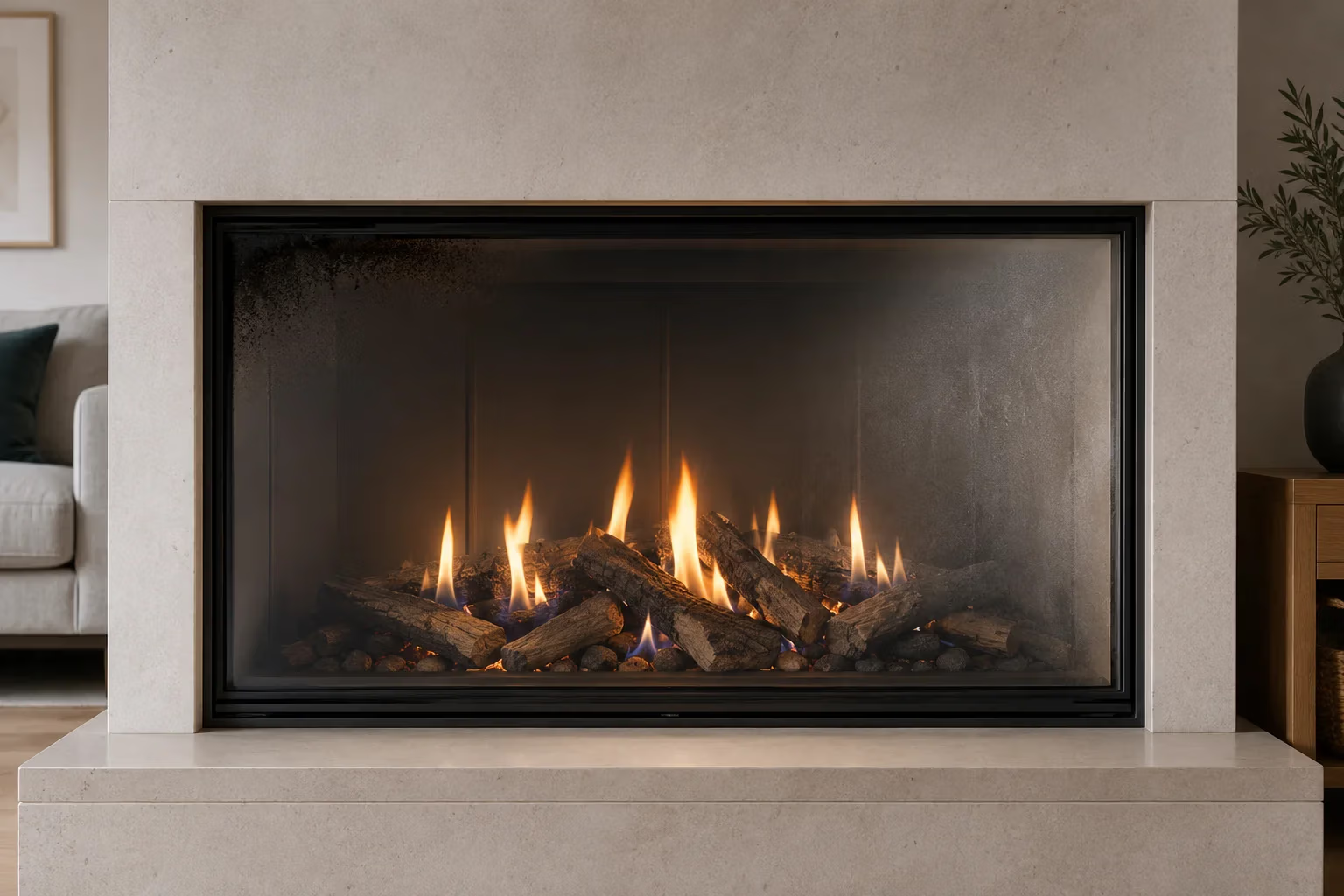
Why do efficient gas fires have glass fronts?
The glass is not simply a decorative window. On many modern high efficiency fires it forms part of a closed or carefully controlled combustion chamber. Keeping the hot gases behind the glass allows more heat to be transferred into the room instead of disappearing straight up the chimney or flue.
Not every glass fronted gas fire works in exactly the same way. A balanced flue fire normally takes combustion air from outside and returns the products of combustion outside through a purpose designed flue. Other glass fronted fires use a conventional chimney or flue. The appliance instructions therefore take priority over any general cleaning advice.
Important: the glass, frame, clips and seals are safety critical parts. Never run a fire with the glass removed, cracked, incorrectly seated or with a damaged seal.
Black soot or milky clouding: what is the difference?
| What you can see | What it usually is | What to do |
|---|---|---|
| Milky white, pale grey or chalky haze | A fine film from combustion by products, moisture, minerals or new appliance curing residues | Clean it at the interval and by the method stated in the fire manual. Investigate if it becomes unusually heavy or returns immediately |
| Temporary mist or droplets at start up | Condensation as water vapour meets cold glass | It should clear as the fire warms. Persistent or excessive condensation needs checking |
| Dry black or brown black deposit | Soot: carbon produced when gas does not burn completely | Do not keep wiping it away. Stop using the fire and arrange a Gas Safe inspection if it is more than a slight one off mark |
| Rainbow, crazed, rough or permanently dull surface | Possible baked on deposit, chemical damage, scratching or permanent surface change | Do not scrape it. Ask the manufacturer, retailer or service engineer whether the glass can be restored or must be replaced |
The appearance is a useful clue, not a remote safety diagnosis. Flame pattern, fuel bed layout, gas pressure, air supply and flue performance must be checked on the appliance itself.
What causes the milky white film?
A pale film on the inside of glass fronted gas fires is common. It can be more noticeable because a sealed front prevents the owner from casually wiping the glass every week, and the hot ceramic glass repeatedly heats and cools.
1. Normal products of combustion
Natural gas and LPG burn very cleanly when the appliance is correctly set, but combustion still produces water vapour and small quantities of non combustible material. Fireplace manufacturer Napoleon explains in its glass cleaning guidance that minerals associated with the fuel or the air can settle on the glass and form a grey white film. This is usually a cleaning issue rather than evidence of soot.
2. Condensation on cold glass
Water vapour is a normal product of burning gas. When a cold fire is first lit, vapour can condense on the cooler glass as mist or tiny droplets. This should normally disappear as the appliance reaches operating temperature. A temporary mist is not the same thing as a dry white film that remains after the fire has cooled.
3. A new fire curing for the first time
Paint, ceramic logs, sealants and other manufacturing materials can release small amounts of residue as a new fire heats for the first several hours. Manufacturers commonly instruct owners to ventilate the room, complete the initial burn off and clean the glass after the first firing period. Heat and Glo, for example, instructs owners of one model to clean the glass after its first three to four hours of use.
4. Deposits left too long
Repeated heating can bake a pale film onto the surface and make it progressively harder to remove. Some manufacturer instructions warn that early cleaning matters. Once the surface has become permanently etched, scratched or chemically damaged, more aggressive rubbing is likely to make matters worse rather than restore it.
Usually routine maintenance: a light, even, milky film that develops gradually and cleans off using the approved method is generally expected. It should still be cleaned before it becomes stubborn.
What causes black soot on gas fire glass?
Black soot forms when carbon in the gas is not completely burned. Unlike pale clouding, recurring black soot can indicate an incorrect flame pattern or a combustion, ventilation or flue problem. The Health and Safety Executive lists soot or yellow brown staining around an appliance among the warning signs of incomplete combustion that may produce carbon monoxide.
1. Logs, coals or decorative media are in the wrong position
Modern fuel effect pieces are not arranged simply to look attractive. Their exact position controls where the flames travel and how air reaches the burner. A log or coal placed across a burner port can make the flame strike a cool surface, disturb the designed air to gas mixture and produce soot. Using the wrong media, adding extra pieces or rearranging them by eye can have the same effect.
If the fuel bed has been moved, do not guess the layout. Use the exact diagram for the model or ask a Gas Safe registered engineer to restore it. Valor also warns that replacement media must be compatible with the particular fireplace model.
2. Restricted burner ports or combustion air
Dust, lint, pet hair, debris or damaged fuel bed material can restrict burner ports or airways. On a balanced flue appliance, an obstructed terminal or flue can upset the designed air supply and exhaust route. Conventional flue appliances can also be affected by blocked ventilation or chimney problems. These are servicing checks, not jobs for a vacuum cleaner pushed through the fuel bed.
3. Incorrect gas pressure, injector or air to gas setting
The burner must receive the correct gas type, pressure and quantity, mixed with the designed amount of air. An incorrect setting, damaged component, poor conversion between natural gas and LPG, or a supply fault can create a rich flame and soot. Gas pressure, combustion performance and burner settings must be tested by a suitably qualified Gas Safe registered engineer.
4. Glass, gasket or flue assembly is not correctly sealed
On a room sealed balanced flue fire, the glass assembly and its gasket are part of the sealed combustion system. A displaced seal, loose clip, damaged glass or incorrectly assembled front can alter operation and make the appliance unsafe. The same principle applies whenever the manufacturer requires a fixed glass assembly. Do not operate the fire until it is correctly refitted and checked.
5. The fire is overdue for servicing
Soot may be the visible symptom of a burner, pilot, air passage or flue that needs attention. HSE advises homeowners never to block ventilation, to keep flues clear and to have gas appliances regularly maintained and serviced annually by a Gas Safe registered engineer.
Is any blackening normal?
Some decorative logs or coals are designed to darken where flames touch them, and a slight mark can occasionally appear during the first burn if manufacturing residues are curing. That does not make repeated soot on the glass normal. If the glass turns black again soon after cleaning, the fire is giving you evidence of a problem. Cleaning removes the evidence. Servicing removes the cause.
How to prevent the glass discolouring
- Have the fire installed and commissioned by a Gas Safe registered engineer who is qualified for that appliance type
- Keep every log, coal, stone and ember exactly where the manufacturer specifies. Do not add decorative material or mix pieces from another model
- Do not block room vents, appliance grilles or an external balanced flue terminal. Keep the terminal clear of vegetation and debris without dismantling it
- Follow the manufacturer’s initial burn off instructions for a new appliance and ventilate the room as directed
- Clean pale film before repeated heat cycles bake it on. Use the interval and product stated in the owner manual
- Arrange an annual service. Ask the engineer to check burner condition, fuel bed layout, seals, glass, airways, flue or terminal, gas pressure and flame picture as applicable
- Investigate new or rapid soot immediately instead of treating it as normal dirt
How to clean glass fronted gas fire glass safely
First identify what you are cleaning. Pale film can normally be removed as routine maintenance. Black soot should prompt investigation before the fire is used again. Never clean or dismantle a gas fire while it is operating or still warm.
Before you start
- Read the owner manual for the exact make and model. It must explain whether the user may remove or open the glass and which cleaner is permitted
- Switch the fire off and allow the glass, frame and fuel bed to become completely cold. Follow the manual for isolating electrical power, the pilot or gas supply where required
- If the front is removable by the user, place the glass upright or flat only as the manufacturer directs, on a clean padded surface where it cannot be knocked
- Do not disturb the logs, coals, embers or other media. Their position affects combustion
- Check the glass and seal for cracks, chips, gaps or damage. If anything is doubtful, do not relight the appliance
Cleaning a pale or milky film
- Use a cleaner specifically approved for gas fire ceramic glass by the appliance manufacturer. Many makers specify a cream type fireplace glass cleaner. The manual is the final word
- Apply a small amount to a soft, clean cloth that does not shed fibres rather than spraying liquid around the firebox, seals or painted surfaces
- Work gently over the cool glass. Allow the product to act for the time stated on its label. Do not compensate for stubborn marks with a blade or scouring pad
- Remove every trace of cleaner with a separate clean cloth and buff the glass dry. Residue can bake onto the surface during the next firing
- Clean both sides only if the manual permits access. Refit the glass, clips, trims and guard exactly as instructed, ensuring the seal is correctly seated
What not to use
- Do not use oven cleaner, ammonia based household glass cleaner or an aerosol unless the fire manufacturer expressly permits it
- Do not use razor blades, knives, wire wool, ash, abrasive powder, scouring pads or magic erasers unless the appliance manufacturer specifically approves that exact method
- Do not clean hot glass or cool it rapidly with water. Thermal shock can damage it
- Do not soak the gasket, rope seal, clips, paint, burner or fuel effect pieces
- Do not substitute ordinary window glass if the panel is damaged. Use only the correct manufacturer approved glass assembly
Why the manual matters: cleaning instructions differ. One manufacturer may approve a particular cream cleaner while another prohibits household glass products. Generic internet advice cannot know the coating, glass type or seal arrangement fitted to your fire.
When should you stop using the fire?
Turn the fire off and arrange professional advice if:
- black soot returns quickly after cleaning
- the flames have changed, appear unstable, lift away from the burner or strike the glass differently
- logs, coals or embers have moved, cracked or collapsed
- the glass, clips, frame or gasket is damaged or will not seat correctly
- the balanced flue terminal, chimney or ventilation may be obstructed
- the pilot repeatedly goes out or the fire behaves differently from normal
- you see soot or staining outside the combustion chamber
- a carbon monoxide alarm sounds or anybody develops headache, dizziness, nausea or unusual tiredness
Safety first: if you smell gas, suspect carbon monoxide or a CO alarm activates, turn off the appliance if it is safe to do so, ventilate, leave the property and follow the emergency guidance. Call the National Gas Emergency Service on 0800 111 999. Do not use the fire again until it has been checked.
Our verdict
Milky white clouding and black soot should not be treated as the same fault. A light pale film is a familiar maintenance issue on many glass fronted gas fires, particularly when new. Clean it regularly using the method approved for your model so it does not become baked on.
Black soot is different. It means the gas has not burned completely somewhere in the flame path. Incorrect fuel bed placement is a common cause, but burner, gas pressure, air supply, seal or flue faults are also possible. That is why recurring soot belongs on a Gas Safe engineer’s job sheet, not merely on your cleaning list. If your old fire is giving repeated trouble, our guide on replacing an old gas fire covers what to check first. Wood burner owners have a cousin of this problem, covered in why wood burning stove glass goes black.
Soot on the glass is also a reminder to check your alarm. Our guide on where to position a carbon monoxide alarm explains the correct distances from a gas fire.
Frequently asked questions
Why has the glass on my gas fire turned cloudy white?
A pale grey white film can be left by water vapour, minerals and other normal combustion by products. New fires can also deposit curing residues during their first hours of use. Clean it using the method specified in the owner manual.
Is white clouding on gas fire glass dangerous?
A light film that develops gradually and cleans off is usually a maintenance issue. Heavy, sudden or persistent deposits, damaged glass, unusual flames or other changes should be checked professionally.
Why is there black soot inside my gas fire?
Black soot is carbon from incomplete combustion. Possible causes include misplaced logs or coals, blocked burner ports or airways, an incorrect air to gas mixture, gas pressure problems, damaged seals or flue issues.
Can I keep using a gas fire with black glass?
Do not keep using a fire that develops recurring or significant black soot. Turn it off and ask a suitably qualified Gas Safe registered engineer to find the cause.
Can I use ordinary window cleaner on gas fire glass?
Only if the appliance manual specifically permits it. Many manufacturers prohibit ammonia based or abrasive cleaners and recommend a product made for gas fire ceramic glass.
Can I clean the glass while it is warm?
No. Let the appliance and glass cool completely. Cleaning hot glass risks burns, thermal shock and baked on cleaner residue.
Can I rearrange the coals or logs after cleaning?
Only into the exact positions shown in the manufacturer’s instructions. Their layout controls the flame path and combustion. If you are unsure, leave them alone and call a Gas Safe engineer.
How often should a gas fire be serviced?
HSE advises that gas appliances are regularly maintained and serviced annually by a Gas Safe registered engineer. Follow any additional interval stated by the manufacturer.
Need advice about a glass fronted gas fire?
Visit the Heatwave Fireplaces showroom at Osnath Works, Lythgoes Lane, Warrington, WA2 7XE. Bring the make and model, a photograph of the fire and glass, and a note of when the discolouration appears. We can help you distinguish routine cleaning from a fault that needs professional servicing, and compare efficient gas fire options for your home, from living flame fires to glass fronted high efficiency models. Call 01925 230045.
This article provides general customer guidance. The appliance manual and an on site assessment by a suitably qualified Gas Safe registered engineer take priority.
Sources used for this article
- HSE: Carbon monoxide awareness and signs of incomplete combustion
- HSE: Gas safety advice for homeowners
- Gas Safe Register: Find and check a registered engineer
- Heat and Glo: Owner manual with glass, seal and servicing guidance
- Valor: Fireplace media compatibility guidance
- Napoleon: Gas fireplace glass film and cleaning guidance (manufacturer website)