

No. Log burners are not being banned in the UK.
Quick answer
Log burners are not being banned across the UK in 2026. Instead, the focus is on reducing smoke and fine particle pollution by tightening fuel standards, improving the performance of new appliances, and enforcing smoke control rules in many towns and cities.
Wondering about the tax rumours as well? Read our follow up guide: Will log burners be taxed?
There is no law requiring people to remove a correctly installed log burner, and there is no announced date after which owning or using one will become illegal. What is happening is a tightening of the rules around emissions, the sale of new stoves and the fuel people burn. That is not the same as a ban.
We understand why customers are confused. Headlines about wood burner bans appear regularly, often without explaining the difference between a government consultation, a restriction in a Smoke Control Area and an actual nationwide ban. So let us separate the facts from the noise.
The short answer: you can still buy, install and use a log burner in the UK, provided the appliance, installation, fuel and the way you use it comply with the rules that apply where you live.
Why are people talking about a log burner ban?
The latest round of concern follows a UK wide government consultation published by Defra on 22 January 2026. It proposed a tougher smoke emission limit for new solid fuel appliances, mandatory emissions and health labels for new stoves and fuels, and higher penalties for suppliers who break existing fuel rules.
The consultation closed on 19 March 2026. At the time this article was checked, the government had not published its final response or made the proposed measures law.
Most importantly, the consultation did not propose banning log burners. It stated that the proposed new emissions standard would apply only to new appliances placed on the market, and said that solid fuel appliances already installed or placed into the market before any new legislation comes into force would not be affected.
The proposal was to reduce the permitted smoke rate for new stoves to 1g per hour, plus an allowance linked to heat output. Defra suggested that any new standard should not come into force until three to five years after the legislation is made, giving manufacturers time to adapt. A proposal is not a rule, however, and those details could change after consultation.
What this means for customers: cleaner new stoves are likely, but a nationwide ban is not currently on the table.
Are existing log burners going to be made illegal?
There is no announced plan to make every existing log burner illegal or to order homeowners to remove compliant appliances.
An existing stove still has to be used lawfully. You must follow Smoke Control Area rules, burn the correct fuel, avoid causing a statutory smoke nuisance and keep the appliance and chimney safe. Our guide to chimney sweeping and stove maintenance covers the practical side.
If somebody tells you that all old log burners are being banned, ask them for the legislation. At present, there is none that says that.
Can I still have a new log burner installed?
Yes. New log burners can still be bought and installed.
Any new stove placed on the UK market must meet the applicable Ecodesign requirements. There is an important extra point in a Smoke Control Area: Ecodesign compliant does not automatically mean approved for burning wood there. The appliance must also be listed as a Defra exempt appliance for the fuel you intend to use.
The installation must comply with Building Regulations. In England the relevant guidance is Approved Document J, covering combustion air, hearths, flues, chimneys and the safe discharge of combustion products. A suitably registered competent installer can self certify qualifying work; otherwise Building Control approval may be required. Fitting for our customers is carried out by the trusted independent engineers we work with, paid direct on completion.
What are the rules in a Smoke Control Area?
A Smoke Control Area is a legally designated area where emissions from chimneys are controlled. You generally cannot emit smoke from a chimney there. You may burn wood only in an appliance approved for that purpose, used in accordance with its instructions, or use an authorised smokeless fuel in a suitable appliance.
In England, GOV.UK says a person may face a civil penalty of up to £300 for emitting smoke from a chimney in a Smoke Control Area. Buying unauthorised fuel for use in a non approved appliance can lead to a fine of up to £1,000.
Do not rely solely on a postcode map. Defra says its map is indicative and advises householders to confirm the position with their local council.
What does this mean in Warrington?
This matters to our local customers. Warrington Borough Council states that the majority of Warrington is covered by Smoke Control Areas, with exceptions in parts of Stretton and Hatton.
That does not mean log burners are banned in Warrington. It means you need the correct appliance and fuel, installed and operated correctly.
If you are considering a stove for a home in Warrington, Widnes, Runcorn, Northwich, Altrincham or elsewhere in the area, check the exact address with the relevant council before choosing the appliance. We can then help you select a suitable model rather than leaving the legal detail until after you have bought it.
What wood can I burn?
Use clean, dry wood with a moisture content of 20 percent or less. In England, small quantities of firewood sold for immediate domestic use must carry the Ready to Burn logo, which Defra says certifies wood at that moisture level. If you buy larger quantities or season your own logs, use a moisture meter before burning them.
Do not burn wet or unseasoned wood, painted or treated timber, old furniture, fence panels, construction waste, household rubbish, or any fuel the stove manufacturer does not permit.
Wet wood gives less useful heat, creates more smoke and encourages soot and tar deposits in the stove and chimney. Burning treated timber or rubbish can release toxic pollutants. Saving a few pounds on questionable fuel is a poor bargain when the chimney, the neighbours and your lungs pick up the bill.
Are the rules the same across the whole UK?
Not entirely. Air quality, building standards and some fuel rules are devolved, so the detail differs between the four nations.
| Nation | Position as checked on 12 September 2026 |
|---|---|
| England | Log burners remain legal. Ecodesign, Smoke Control Area, fuel and Building Regulations rules apply. The 2026 consultation proposed tougher standards for new appliances, not a ban. |
| Wales | No nationwide ban. Smoke Control Area restrictions apply, and Welsh clean air legislation gives authorities stronger powers. Check local rules and Welsh building requirements. |
| Scotland | No nationwide ban. Since 1 January 2025, Scottish rules expressly allow wood burning stoves in all new homes and buildings, subject to the relevant requirements. |
| Northern Ireland | No nationwide ban. Smoke Control Areas operate under Northern Irish legislation, enforced by district councils. |
Because our showroom serves customers mainly in Warrington and the surrounding North West, the practical advice in this article focuses on England.
Why is the government tightening the standards?
The honest answer is air quality. Fine particulate matter, known as PM2.5, is small enough to enter the lungs and bloodstream. Defra’s latest published emissions statistics say domestic combustion contributed 20 percent of total UK PM2.5 emissions in 2024, with indoor wood burning alone contributing 12 percent.
Those figures cover national emissions, not the exposure caused by one particular stove, and they should not be used to pretend every appliance or every user performs identically. Stove design, installation, fuel moisture, chimney performance and how the fire is operated all make a difference. Nevertheless, wood smoke is a genuine air quality issue and it would be wrong to brush it aside.
This is why the direction of travel is towards cleaner appliances, clearer information and better burning practice, not a blanket ban.
How to use a log burner responsibly
- Burn only clean, dry wood at 20 percent moisture or below.
- Follow the stove manufacturer’s instructions and use only permitted fuels.
- Do not keep the stove smouldering overnight.
- Have the chimney swept regularly. Defra advises up to twice a year, depending on use.
- Have the appliance maintained and checked regularly.
- Keep the air controls open enough for proper combustion; a starved fire creates more smoke.
- Fit and test a carbon monoxide alarm.
- Be considerate: even legal burning can become a nuisance if smoke repeatedly affects neighbours.
Should I still buy a log burner in 2026?
If a log burner suits your home and the way you intend to use it, there is no current ban preventing you from buying one.
The sensible approach is to buy a good quality current appliance rather than the cheapest box available online. Make sure it is correctly sized for the room, Ecodesign compliant and, where necessary, approved for use in a Smoke Control Area. Our guide on what to check before choosing a log burner walks through the practical points, and a stove that is too large is often run too slowly, which increases smoke and deposits. Bigger is not automatically better.
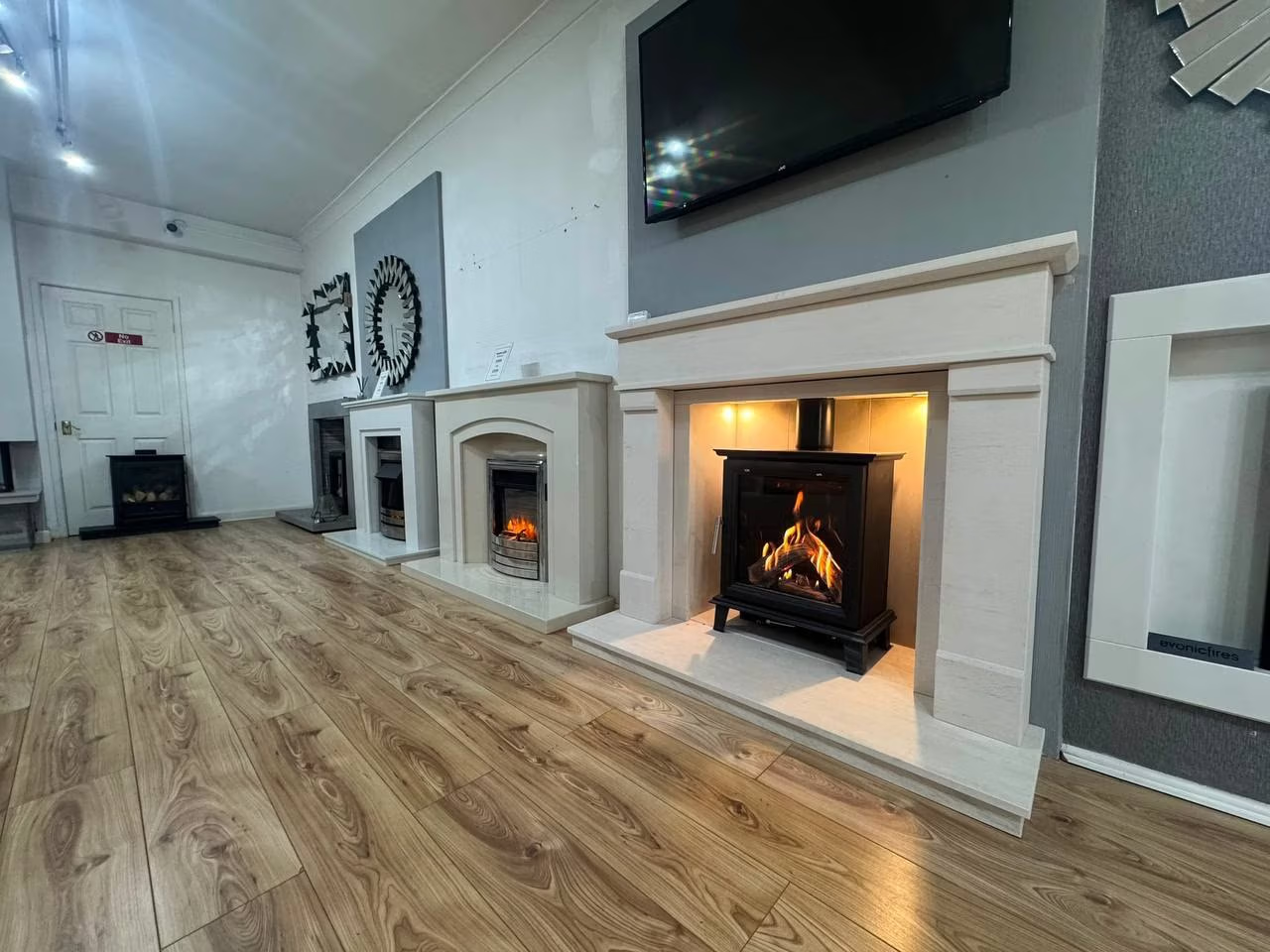
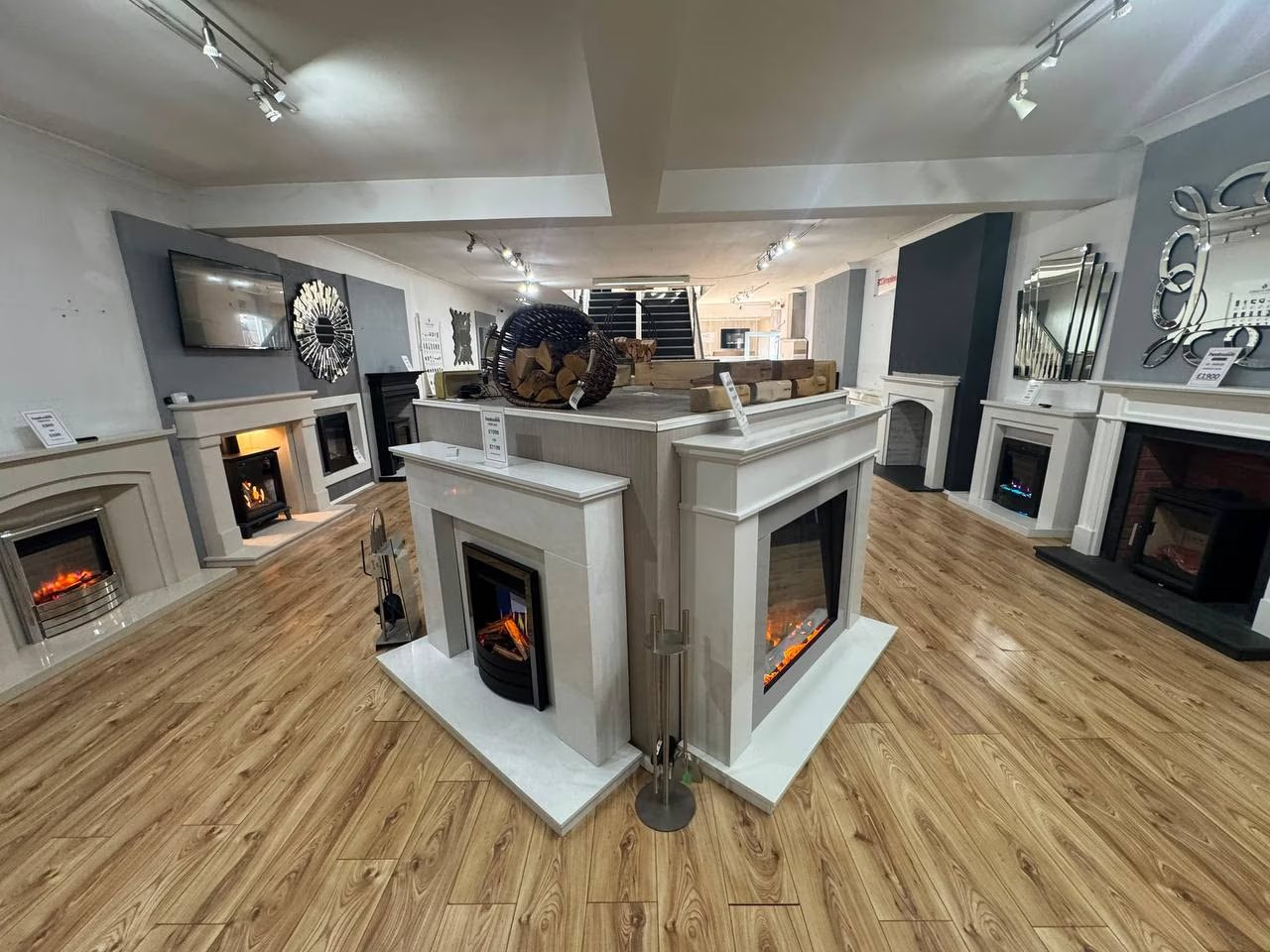
At Heatwave we would rather establish what will work in your room before recommending a model. Bring photographs and approximate dimensions to our Warrington showroom and we can talk through the options in plain English, with working stoves you can see lit.
The bottom line
Log burners are not being banned in the UK. The rules are becoming stricter because government policy is aimed at reducing smoke and particulate emissions. The 2026 proposals concern cleaner new stoves, better labelling and enforcement. They do not require existing compliant burners to be removed.
If you are unsure whether your property is in a Smoke Control Area, or which type of stove is suitable, visit the Heatwave showroom at Osnath Works, Lythgoes Lane, Warrington, WA2 7XE, or call 01925 230045. We will help you check the practical details before you make a decision.
Frequently asked questions
Will log burners be banned in 2027?
No UK wide ban has been announced for 2027. Defra consulted in 2026 on tighter emission limits for new stoves, but proposed allowing three to five years after any new legislation before those limits came into force. Existing appliances would not be affected by that proposal.
Do I have to remove my existing log burner?
No general law requires homeowners to remove an existing log burner. You must still comply with local Smoke Control Area rules, use permitted fuel, avoid smoke nuisance and keep the installation safe.
Can I use a log burner in a Smoke Control Area?
Yes, but if you burn wood the appliance must be approved for use in a Smoke Control Area and operated with the permitted fuel in accordance with its instructions. Check your exact address and appliance model.
Is an Ecodesign stove automatically Defra approved?
No. Ecodesign compliance and exemption for use in a Smoke Control Area are related but separate requirements. If you want to burn wood in a Smoke Control Area, check that the exact model appears on the official exempt appliance list.
Is it illegal to burn wet wood?
In England the law restricts the sale of wet wood for domestic burning. Whatever its source, Defra advises that wood should be at 20 percent moisture or less before it is burned. Wet wood is smoky, inefficient and can damage a stove and chimney.
Are multi fuel stoves being banned?
No nationwide ban has been announced. New solid fuel appliances must meet current standards, and the fuel used must be lawful and permitted by the manufacturer. Traditional house coal can no longer legally be sold for domestic use in England.
Sources and further reading
This article was researched using primary government and official local authority sources and was fact checked on 15 August 2026:
- Defra: Reduce smoke emissions from solid fuel burning, 2026 consultation
- GOV.UK: Smoke Control Areas, the rules
- Defra: Open fires and wood burning stoves, a practical guide
- Defra statistics: UK particulate matter emissions
- Warrington Borough Council: Air quality and Smoke Control Areas
- GOV.UK: Approved Document J
- GOV.UK: Selling wood for domestic use in England
- Welsh Government: Smoke Control Area guidance
- Scottish Government: New Build Heat Standard