

Reviewed 2 September 2026. Sources checked the same day.
The short answer: identify and survey the chimney or flue before you order a new fire. A sound traditional brick chimney, often called Class 1, usually gives the widest choice of conventional flue gas fires and the most fireplace depth. Pre cast flues and 125 mm (5 inch) Class 2 flues normally restrict you to fires approved for a shallower opening and a smaller flue. Balanced flue gas fires and twin wall stove chimneys are purpose designed systems, not interchangeable pipes.
Why the flue must come before the fire
A customer can choose the perfect fire for the room and still choose the wrong appliance for the building. The firebox may be too deep for the opening, the flue may be too small, the route may be wrong for the fuel, or the existing chimney may fail its inspection. At that point the options are to change the appliance, alter the fireplace or install a completely different flue system.
The sensible order is simple: identify the likely system, measure the opening, inspect and test the flue, then shortlist appliances whose installation instructions approve that exact arrangement. A roof terminal is an important clue, but it is never a certificate of suitability.
Class 1 and Class 2 are useful trade language, not the final test. The terms remain familiar in gas fire brochures and showrooms and they describe broad flue capability. Current safety depends on the actual construction, size, route, condition, terminal and the appliance manufacturer’s instructions.
What is the difference between a chimney and a flue?
The chimney is the structure or system that carries combustion products safely outdoors. The flue is the passage inside it that the gases actually travel through. A brick chimney may contain an original masonry passage, a clay liner or a later flexible metal liner. A factory made metal chimney has its own inner flue wall.
That distinction matters because the outside can look reassuring while the hidden flue is cracked, obstructed, corroded, incorrectly sized or lined for a different fuel.
Quick identification guide
| Likely type | Clues outside | Clues inside | Usual buying implication |
|---|---|---|---|
| Masonry chimney (Class 1) | Substantial brick stack with a chimney pot or gas terminal | Chimney breast and usually a deeper fireplace opening | Broadest conventional gas fire choice. May accept a stove after inspection and suitable lining |
| Pre cast flue | Raised ridge vent, sometimes a small terminal | Flat or shallow wall with a concrete or clay block flue in the cavity | Usually slimline gas fires. Opening depth is the main restriction |
| Pre fabricated metal flue (Class 2) | Small metal cowl or 125 mm (5 inch) terminal | Metal flue or boxed in route, often with a purpose made flue box | Gas fires expressly approved for that flue and the available depth |
| Balanced flue | Round terminal through an outside wall or roof | Glass fronted room sealed fire with no open chimney connection | Only the matched balanced flue appliance and components |
| Insulated twin wall | Larger stainless or black insulated pipe, often up an outside wall or through the roof | Stove connection changing into an insulated system chimney | Makes a stove possible without a masonry chimney, subject to a designed route |
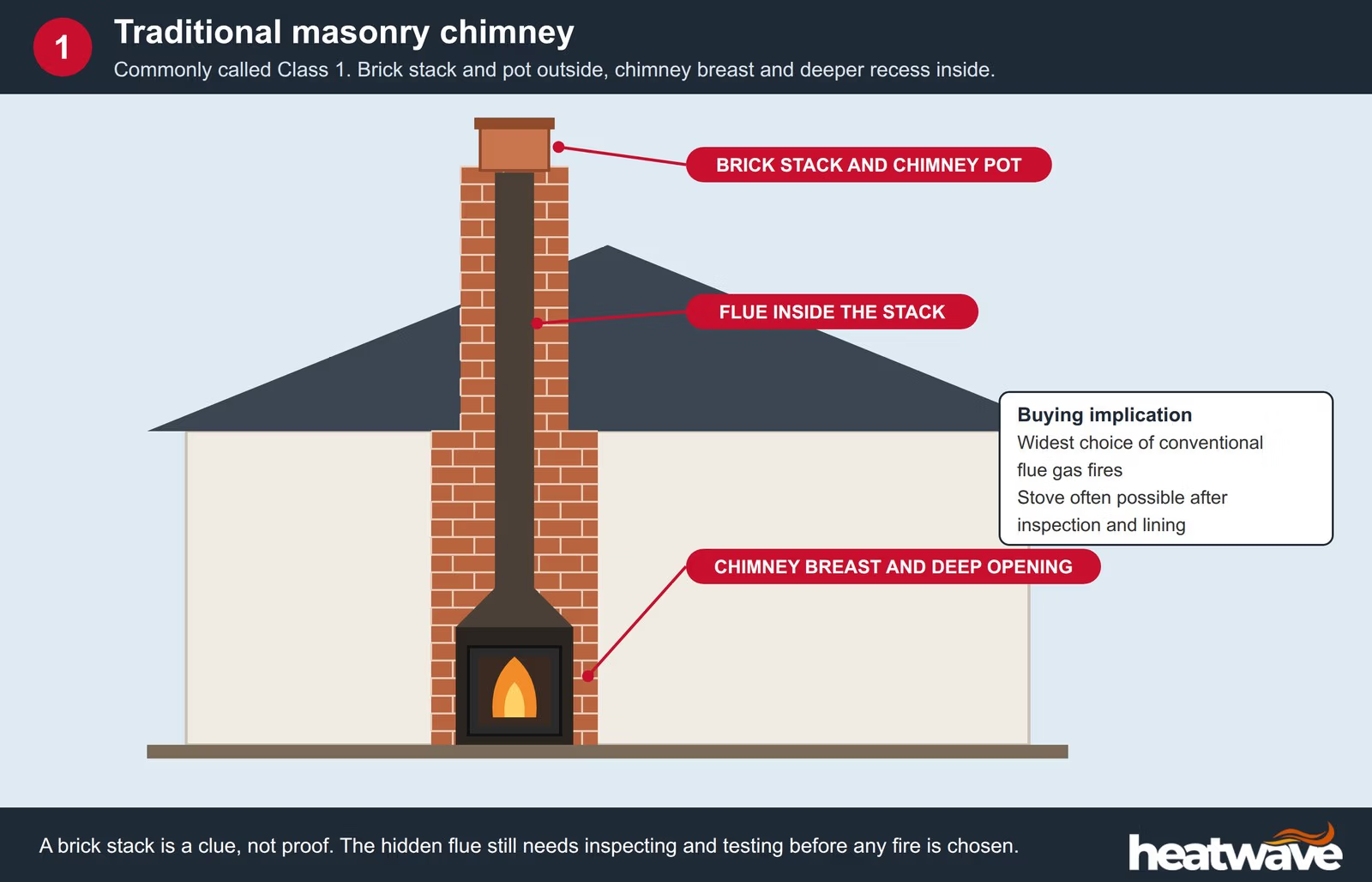
1. Traditional masonry chimney, commonly called Class 1
This is the traditional brick or stone chimney found in many older homes. From outside, the strongest clue is a substantial chimney stack rising above the roof, usually finished with a chimney pot or an approved gas terminal. Inside there is normally a chimney breast and a deeper fireplace recess.
Why it is usually the most versatile option
For a conventional flue gas fire, a sound Class 1 chimney is generally the best starting point because the recess often provides enough depth for full depth radiant, convector and many glass fronted fires. Manufacturers still commonly use 175 mm (7 inch) terminology when describing Class 1 compatibility, although the exact fire and flue must be checked.
Best does not mean anything fits. The opening width, height, depth, gather, debris space, ventilation and chimney condition all matter. A large decorative fuel effect gas fire can need a much larger effective flue than a standard radiant or convector fire. Approved Document J gives 125 mm as a minimum circular flue for a conventional radiant or convector gas fire, while larger openings and other fire types can require more.
Can it take a wood burning stove?
Potentially, yes. This is the only existing chimney type in this guide that commonly offers a straightforward route to a wood burning stove. The chimney must be swept, inspected and found suitable for solid fuel. An old gas liner is not automatically a stove liner. HETAS explains that a chimney must be free from defects and suitable for its proposed use, and if fumes could leak it needs a suitable relining system. Our Warrington reline case study shows what that looks like in practice.
Flue diameter comes from the stove, fuel and installation design. Approved Document J gives 150 mm for many closed solid fuel appliances, with some qualifying appliances permitted to use 125 mm under specified conditions. Never select a stove or liner from the Class 1 label alone. Our guide to choosing a wood burning stove covers the rest of that decision.
2. Pre cast flue, usually the shallowest option
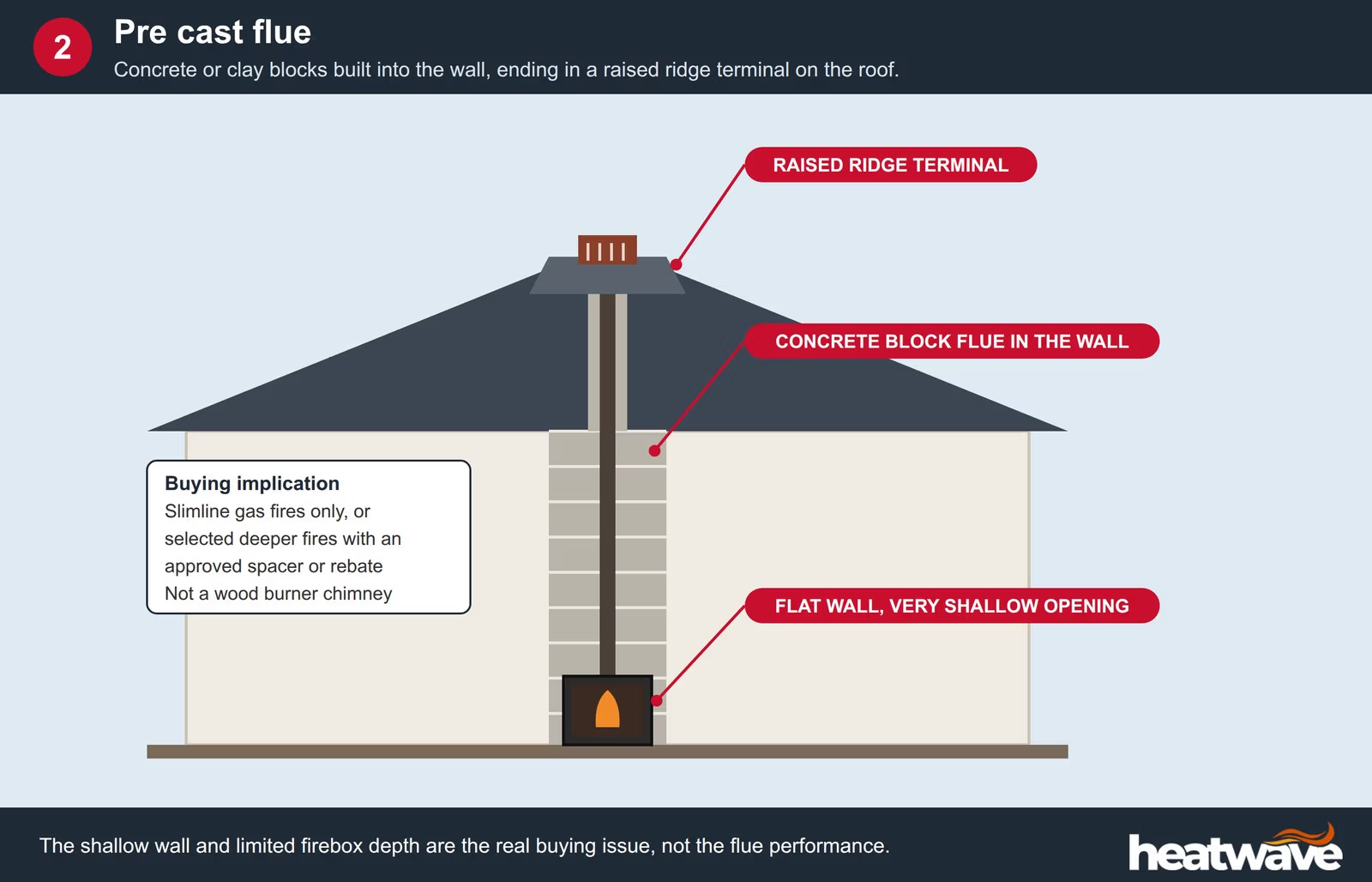
Pre cast systems are formed from interlocking concrete or clay flue blocks, commonly built into the wall cavity. They are frequently found in later twentieth century homes. Instead of a full chimney breast, the fireplace may sit against a flat wall or a very shallow projection.
The main limitation: depth
A pre cast flue can have enough flue performance for an approved gas fire while still providing very little space behind the fireplace opening. A standard full depth inset fire may project too far forward or simply not fit. Slimline fires are designed for this situation. Some deeper fires can be accommodated using a purpose designed rebated surround, spacer frame or approved firebox arrangement, but only where the product instructions allow it.
This is why a measurement such as “the opening is 16 inches wide” is not enough. We need the usable depth, the size and position of the flue opening, the construction around it and any manufacturer specified debris space. Our guide on what to measure for a fireplace shows how to take those figures.
Can a pre cast flue take a wood burner?
No, not as the chimney serving the stove. A typical pre cast gas flue is too small and is not constructed or designated for solid fuel temperatures and soot fire conditions. A wood burning stove may still be possible in the property, but it would need a separate compliant chimney system, normally an insulated twin wall installation designed for the chosen stove.
Source: Elgin & Hall on identifying pre cast ridge vents and appliance limitations.
3. Pre fabricated metal flue, often called Class 2
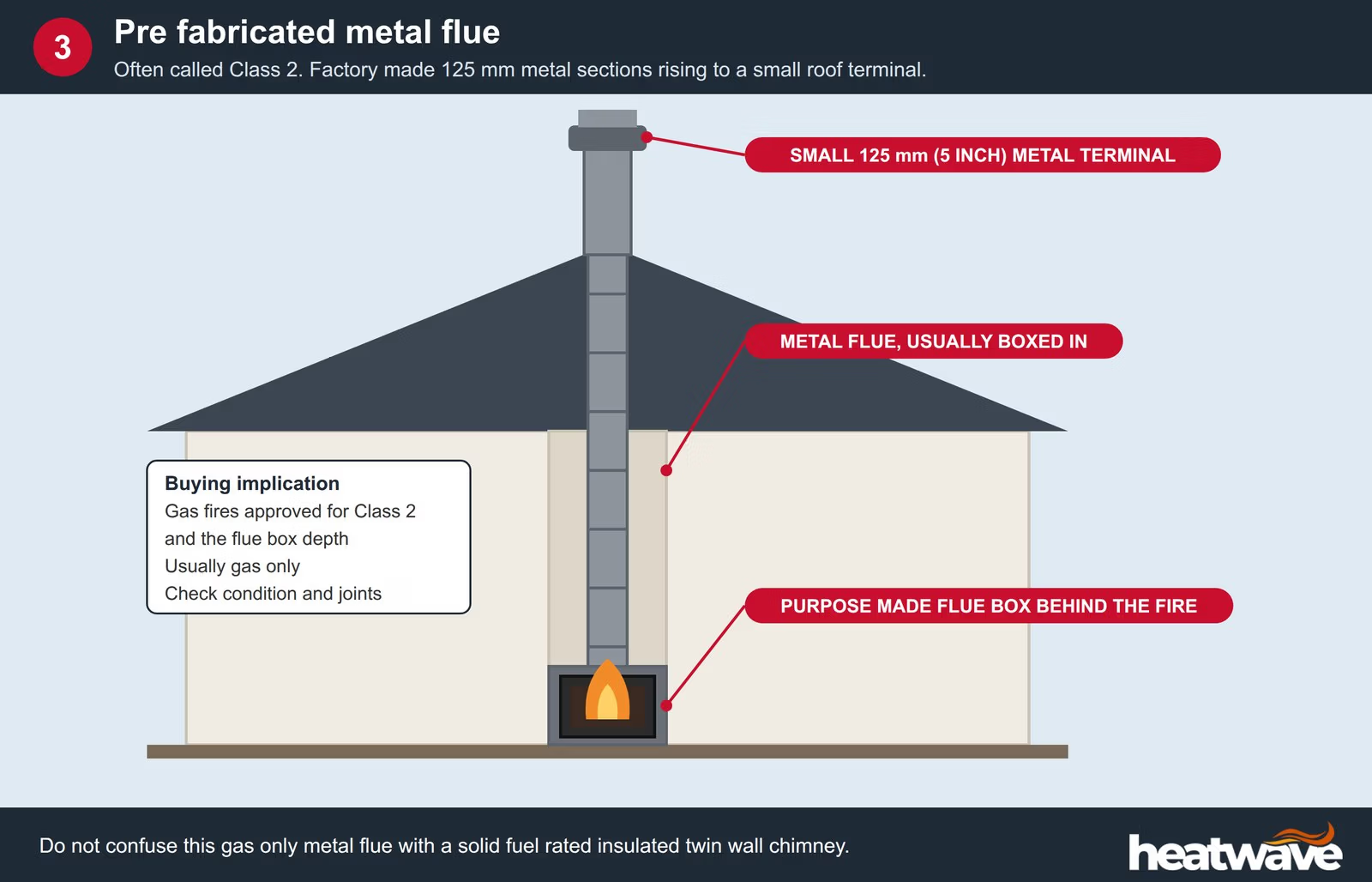
A pre fabricated gas flue normally uses factory made metal sections connected to a purpose made flue box behind the fire. The flue may rise inside a boxed in enclosure and finish above the roof with a small metal terminal rather than a brick stack. In gas fire literature the common 125 mm (5 inch) version is often described as Class 2.
What normally fits
This depends on both the metal flue designation and the depth of its flue box. Many slimline and multiflue gas fires are designed for suitable 125 mm Class 2 systems. Some deeper or higher output fires will not be. One manufacturer may approve more products for its tested flue box than another, which is why a generic Class 2 compatible claim is never enough on its own.
Older metal systems also need checking for continuity, corrosion, incorrect joints, missing supports and alterations hidden by boxing. The visible terminal identifies a possibility. The survey establishes whether the route remains serviceable.
Can it take a wood burner?
Usually not. Most small 125 mm pre fabricated systems found behind gas fires are gas only systems. Larger older factory made chimneys and modern system chimneys may be solid fuel rated, but their performance designation must prove it. Never connect a stove to an unidentified metal flue because it happens to look like a pipe that reaches the roof.
4. Balanced flue, its own room sealed gas fire system
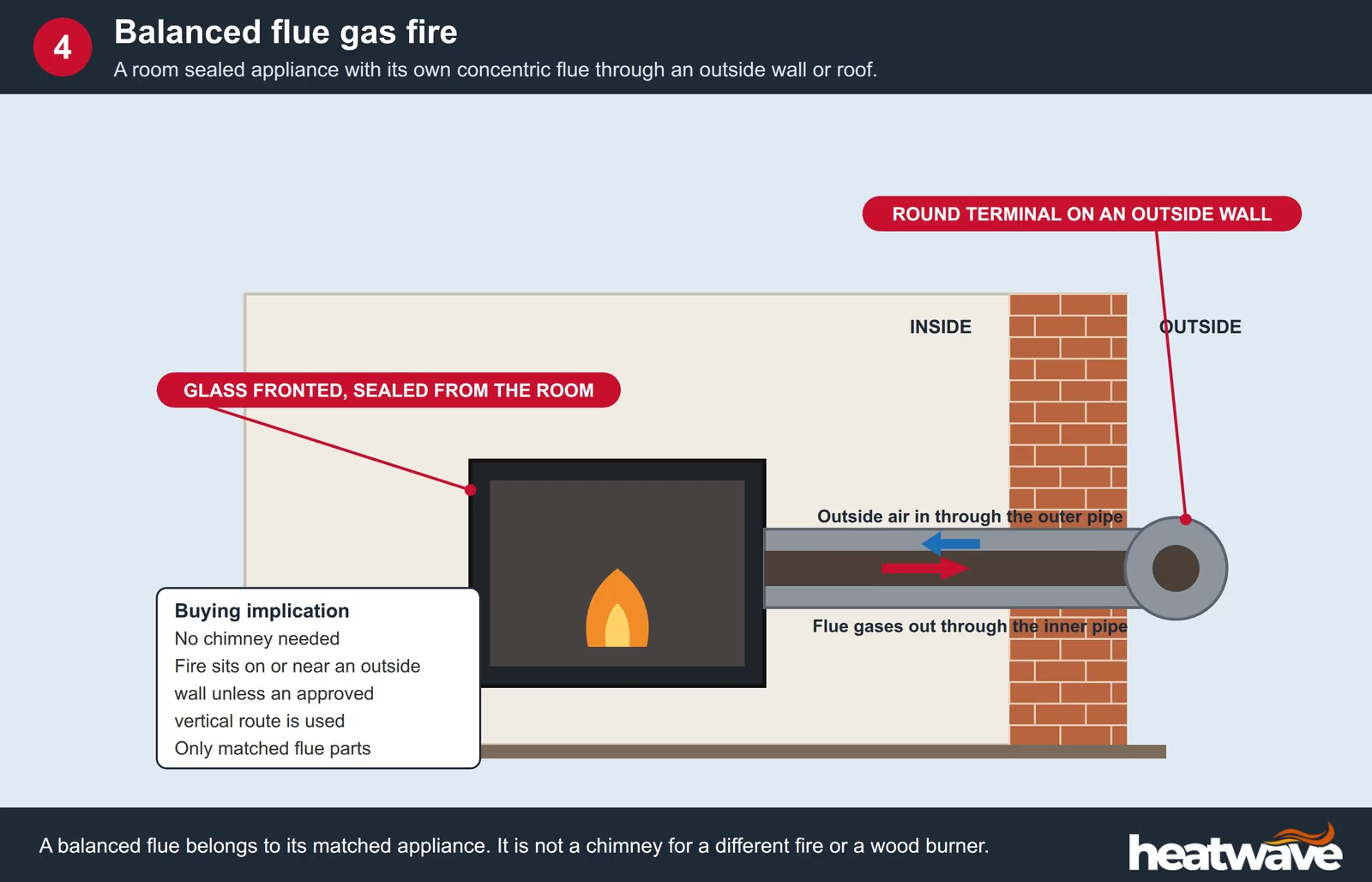
A balanced flue fire does not use an open masonry chimney or a Class 2 flue. The appliance is sealed from the room and connects to a purpose designed concentric flue. One passage brings combustion air in from outside and the other discharges the products of combustion. The terminal commonly passes horizontally through an external wall, although approved vertical systems also exist.
Advantages and limitations
- It can provide an efficient glass fronted gas fire without a conventional chimney. Our Mere case study shows a balanced flue gas stove fitted where no chimney was available
- The fire generally needs to be positioned on or close to a suitable external wall unless the manufacturer offers an approved extended or vertical flue route
- Terminal clearances from openings, boundaries, corners and other features can limit the position
- Only the appliance manufacturer’s approved flue components, lengths, bends and terminal arrangement may be used
- The existing round wall terminal from one fire is not a universal connection for a replacement fire. See our guide to replacing an old gas fire
A balanced flue is for a suitable room sealed gas appliance. It is not a chimney for an open fronted gas fire and not a route for a wood burning stove.
Source: Elgin & Hall on balanced flue identification and operation.
5. Insulated twin wall chimney, for a stove without a masonry chimney
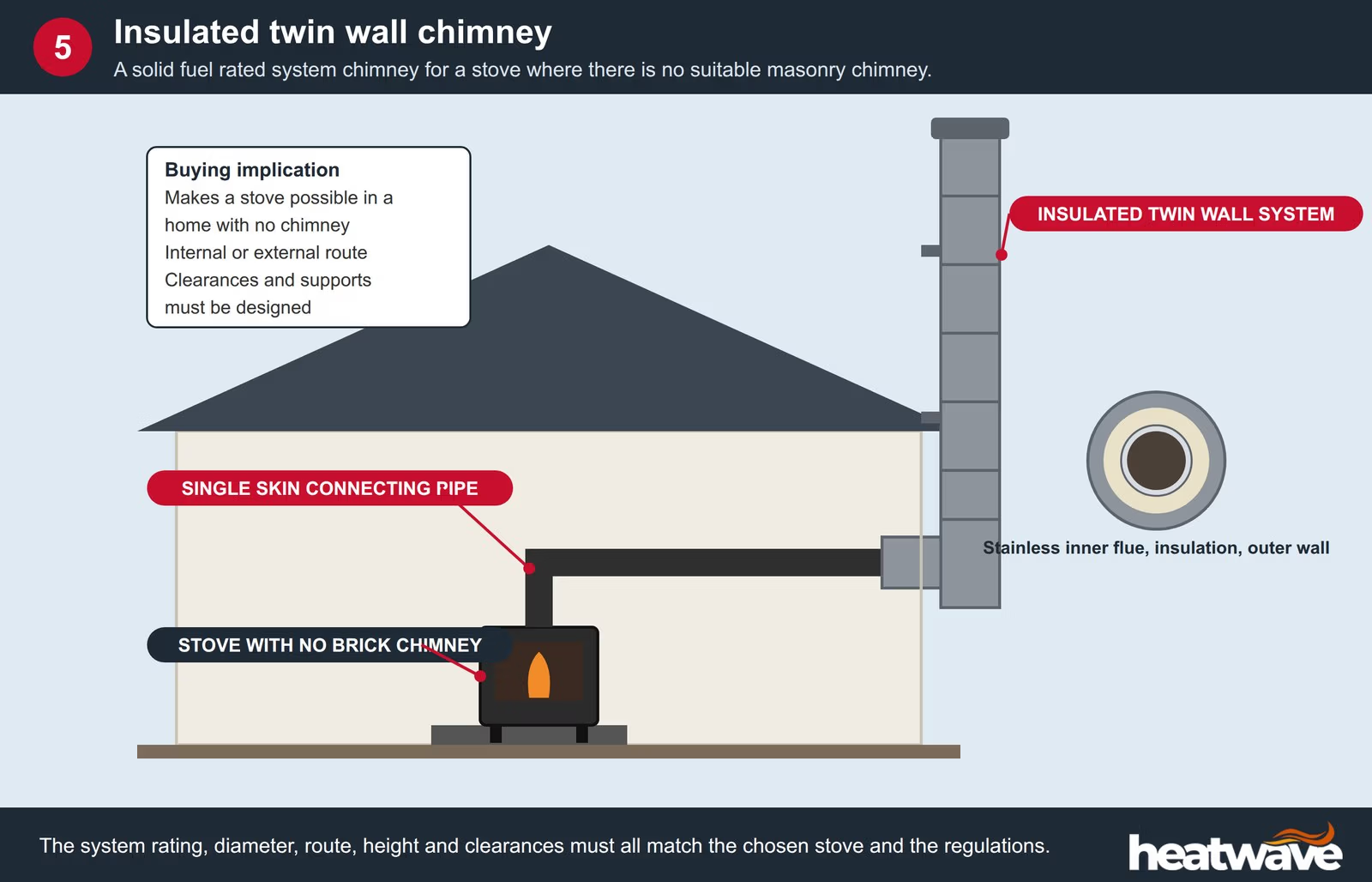
An insulated twin wall system chimney is the modern answer when a customer wants a wood burning stove but the property has no suitable brick chimney. It has a stainless steel inner flue, insulation and a protective outer wall. The insulation keeps gases warmer to support draught and allows the system to pass through or near building elements, subject to its tested clearances and installation design.
Advantages and limitations
- It opens up stove installations in extensions, modern homes and rooms without a chimney breast
- The route may be internal through floors and the roof, or external up an outside wall, depending on the building and system design
- It is more visible than a hidden masonry flue and can affect the appearance of the room and the outside of the house
- Clearance to combustibles, support spacing, fire stopping, access for inspection and sweeping, terminal height and the number of bends all matter
- Components from different chimney systems must not be mixed unless the system manufacturer expressly permits it
A twin wall chimney should not be confused with the small gas only 5 inch pre fabricated flue described above. The correct product designation and fuel and temperature rating are decisive.
Source: Schiedel twin wall system chimney design and installation requirements.
Which system gives you the widest choice?
| System | Gas fire choice | Wood stove potential | Main restriction |
|---|---|---|---|
| Sound masonry chimney (Class 1) | Usually the widest conventional flue range | Often possible after inspection and suitable lining | Condition, dimensions and depth still control the choice |
| Pre cast | Approved slimline or selected deepline gas fires | No, not using the pre cast gas flue | Very shallow opening and small passage |
| 125 mm Class 2 metal | Approved Class 2 or multiflue gas fires | Usually no. Only if the system is proven solid fuel rated | Flue box depth and system condition |
| Balanced flue | Matched room sealed gas fire only | No | External wall or roof route and terminal clearances |
| Solid fuel twin wall | Only where the complete system and appliance are approved for gas | Yes, when designed for the chosen stove | Route, appearance, clearances and installation work |
Why depth matters just as much as flue class
Gas fires described as slimline, deepline and full depth can share a similar visible front but need very different space behind it. One current manufacturer example needs about 110 mm plus 20 mm debris space for a slimline fire, around 125 mm plus debris space for a glass fronted model, and around 180 mm plus debris space for a full depth radiant model. Those figures illustrate the scale of the difference. They are not universal dimensions.
A rebated marble surround can bring the front of the fire forward and create additional room, but the rebate must be designed around the appliance, hearth, firebox and flue arrangement. It is not a licence to conceal an unsuitable installation.
Source: Focal Point Fires on example fire depths and multiflue compatibility.
What to photograph and measure before visiting the showroom
- Take a straight on photograph of the whole fireplace wall, including the floor and ceiling
- Photograph the fireplace opening with a tape measure showing its width, height and usable depth. Do not remove a gas fire or sealed closure plate yourself
- Photograph the chimney breast, or show clearly that the fire is on a flat wall
- Photograph the outside wall behind the fireplace, especially if a balanced flue fire may be an option
- From ground level, photograph the roofline and terminal: chimney pot, raised ridge vent, small metal 5 inch terminal or larger twin wall chimney. Do not climb onto the roof
- Photograph any boxed in flue in an upstairs room or loft only where it is safely visible without opening the enclosure
- Bring the make, model and installation instructions for the existing appliance if you have them
Our article on what to bring to a fireplace showroom has the full list.
What photographs cannot confirm: they cannot prove the internal size, continuity, condition, designation, draught or gas tightness of a chimney or flue. They help us shortlist options. The installer’s survey and tests decide what can be fitted safely.
What the final survey should check
- The exact appliance and fuel
- Opening width, height, depth, lintel and hearth
- Flue construction, diameter or cross sectional area and total route
- Terminal type, location and condition
- Blockages, debris, leakage, corrosion, damaged liners and unauthorised alterations
- Draught, flue flow and spillage performance where applicable
- Ventilation and carbon monoxide alarm position
- Clearances to combustible materials and access for sweeping or servicing
- Whether building control notification or competent person certification is required
Approved Document J says that when an existing chimney is returned to use or used with a different appliance type or rating, it should be checked and altered where necessary for the proposed use. Gas work must be completed by a Gas Safe registered engineer. Solid fuel work is commonly notified through a HETAS registered installer or approved by Building Control. Sources: Approved Document J and HETAS on Building Regulations for wood burning appliances. Our guide to gas fire installation costs explains what that work typically involves.
Our verdict
A sound Class 1 masonry chimney is normally the most flexible option for a conventional gas fire and can often provide a route for a wood burning stove. Pre cast and small Class 2 flues are not bad flues. They simply need a fire designed for their smaller passage and shallower opening. Balanced flues and twin wall chimneys solve different problems and must be designed as complete systems.
The mistake is buying on the appearance of the fire while treating the chimney as an afterthought. Bring us the photographs and measurements first. We can narrow the showroom displays to realistic choices, then arrange for the installation to be confirmed properly. Wondering whether a stove is still a sensible buy? Read our piece on whether log burners will be taxed.
Frequently asked questions
How do I know if I have a Class 1 chimney?
A substantial brick chimney stack and pot, a chimney breast and a deeper fireplace opening are strong clues. They do not confirm the chimney condition, internal size or suitability. Those need inspection and testing.
What does a pre cast flue terminal look like?
The familiar clue is a raised ventilated ridge tile on the roof. Some pre cast systems use a small metal terminal instead, so the wall construction and internal opening must also be checked.
What is the small 5 inch metal terminal on my roof?
It may indicate a 125 mm pre fabricated Class 2 gas flue. Do not identify it from size alone. The hidden metal system, flue box and product designation need confirming.
Can I fit a full depth gas fire to a pre cast flue?
Usually not without creating approved additional depth. Many pre cast installations need a slimline fire, although selected deepline products may work with a suitable rebated surround or spacer specified by the manufacturer.
Can a pre cast or Class 2 gas flue take a wood burner?
A typical pre cast or 125 mm gas only Class 2 flue cannot serve a wood burning stove. A separate solid fuel rated twin wall chimney may make a stove possible.
Do I need a chimney for a balanced flue gas fire?
No conventional chimney is required. The room sealed fire uses its own approved concentric flue through an external wall or roof, subject to route and terminal clearance requirements.
Can I have a wood burner if my house has no chimney?
Often yes. A suitable insulated twin wall system chimney can be designed for the stove and property, either internally or externally, subject to Building Regulations and the manufacturer’s requirements.
Can I choose a fire from photographs alone?
Photographs can identify likely options but cannot confirm flue size, integrity, draught or safe compatibility. The exact appliance still needs an on site survey and the required tests.
Bring your flue clues to Heatwave
Visit Heatwave Fireplaces at Osnath Works, Lythgoes Lane, Warrington, WA2 7XE. Bring photographs of the fireplace, full wall, roof terminal and outside wall, together with the opening measurements. We can show you working gas fires and stoves that match the likely installation rather than sending you home with a brochure full of products that will never fit. Call 01925 230045.
This article provides general guidance for identifying likely chimney and flue types. Appliance instructions, the system designation, Building Regulations and an on site assessment by the appropriately qualified installer take priority.