


Quick answer
A wood burning stove is designed for burning wood logs. A multifuel stove is designed to burn more than one approved fuel type, depending on the appliance and the manufacturer’s instructions. The right choice depends on how you want to use the stove, what fuel you can store, the rules in your area, the condition of your chimney or flue route, and the look you want in the room.
For many customers, the choice starts with a simple question: "Do I want a wood burning stove, or should I choose a multifuel stove?"
It sounds like a product choice, but it is really a practical home choice. The best answer depends on your room, your chimney or flue route, how you plan to use the stove, what fuel you can buy and store, and whether you live in a smoke control area.
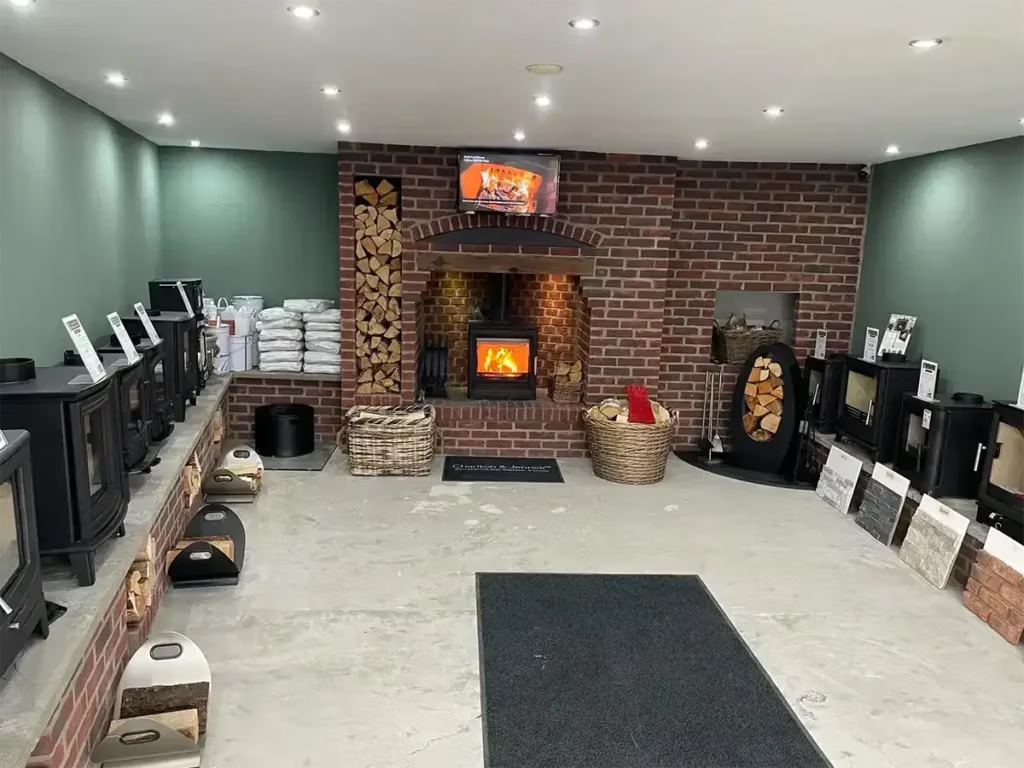
At Heatwave Fireplaces in Warrington, stove conversations often begin before the customer knows the exact model they want. That is normal. A showroom visit is the right time to compare sizes, finishes, fuel routes and what needs checking before you commit.
What is a wood burning stove?
A wood burning stove is designed to burn wood logs. It is usually chosen by customers who like the look, smell and routine of a real log fire in an enclosed stove.
The main thing to understand is that the fuel matters. Wood should be properly seasoned or kiln dried, stored correctly and suitable for the stove. Wet or unsuitable wood can burn poorly, create more smoke and make the stove harder to use well.
If you are drawn to a wood burning stove, think about where the logs will come from, where they will be stored and whether you are happy with the day to day routine of using wood as a fuel.
What is a multifuel stove?
A multifuel stove is designed to burn more than one fuel type, but only the fuels approved for that specific appliance. Customers often consider multifuel stoves because they want more flexibility than wood alone.
That flexibility does not mean "burn anything". The appliance instructions, local rules and approved fuel guidance still matter. The stove, chimney, flue, fuel and installation all need to work together.
For some homes, a multifuel stove can be a practical option. For others, a dedicated wood burning stove may be the better fit if the customer knows they only want to burn logs.
The main difference is fuel choice
The most obvious difference is what you plan to burn.
If you want the straightforward routine of buying and storing dry logs, a wood burning stove may be enough. If you want the option to use more than one suitable fuel type, a multifuel stove may be worth discussing.
This is not only about preference. It also affects how the stove is used, how fuel is stored, what you need to check locally and how confident you feel managing the appliance.
Check the rules before choosing
Many areas have smoke control rules. In those areas, there are restrictions on smoke from chimneys and on the fuels and appliances that can be used.
For Warrington customers, this is worth checking early because Warrington Borough Council states that the majority of Warrington is designated as smoke control areas, with exceptions in parts of Stretton and Hatton.
The safest route is to check your address with the local council and choose an appliance and fuel setup that is suitable for your home. If a stove is described as Defra approved or exempt, you still need to use it with the fuels allowed for that appliance and area.
Think about storage and routine
Stoves are not only chosen in the showroom. They are lived with at home.
Before choosing, ask yourself:
- Do I have dry, sheltered storage for logs?
- Am I happy to manage fuel deliveries or regular purchases?
- Do I know which fuels are suitable for the appliance?
- Will I use the stove often, or mainly on colder evenings?
- Do I want the simplest fuel routine possible?
- Can the room, chimney or flue route support the stove I have in mind?
These questions help narrow the choice before you get too attached to a particular model.
Room size and stove output still matter
A stove should suit the room, not just the fireplace opening. If it is too small, it may not give the result you want. If it is too large, it can make the room uncomfortable and may be used inefficiently.
This is why photos, measurements and a proper discussion are useful. Bring the room width, ceiling height, fireplace opening size if there is one, and photos of the chimney breast or wall where the stove may go.
Heatwave can then help you understand what needs checking next before any final decision is made.
The fireplace setting changes the whole look
A stove does not sit in isolation. The surround, hearth, chamber, mantel and wall finish all affect how the finished fireplace feels.
This is where the Osnath Works showroom and factory gives Heatwave an important advantage. Customers can talk about the stove and the made to measure fireplace setting together, rather than treating the appliance and stonework as separate decisions.
For traditional rooms, that might mean a stone surround, hearth and chamber that feel in proportion with the house. For a cleaner modern room, it might mean a simpler opening and a more restrained finish.
When a wood burning stove may suit you
A wood burning stove may be a good route if you:
- specifically want to burn logs
- have or can create suitable dry log storage
- like the routine of lighting and managing a log fire
- want a traditional stove feel
- are ready to check appliance approval, fuel rules and installation suitability
The key point is to choose the appliance and fuel setup properly, rather than assuming any stove can go into any room.
When a multifuel stove may suit you
A multifuel stove may be worth considering if you:
- want more fuel flexibility
- are open to using suitable approved fuels as well as, or instead of, wood
- want to discuss the practical differences in the showroom
- need advice on what the appliance is designed to burn
- want a stove choice that can be matched carefully with the room and fireplace setting
The important phrase is "suitable approved fuels". A multifuel stove still has limits, and those limits need to be respected.
What to bring to the showroom
If you are comparing wood burning stoves and multifuel stoves, bring:
- photos of the room and fireplace wall
- width, height and depth measurements of the opening if there is one
- photos of the outside chimney or possible flue route
- details of any existing fire or stove
- your postcode or local area for smoke control checks
- a rough idea of how often you expect to use the stove
- examples of stove styles you like
You do not need to have every answer before visiting. The aim is to make the showroom conversation more useful.
Visit Heatwave Fireplaces in Warrington
Choosing between a wood burning stove and a multifuel stove is easier when you can see the products, compare sizes and talk through the practical details.
Heatwave Fireplaces in Warrington can help you look at stove options, understand what needs checking, and think about the fireplace setting around the appliance. If you are considering a bespoke or made to measure fireplace surround, the Osnath Works showroom and factory can also help you explore the stonework and finishing details that make the stove look right in the room.
Bring a few photos and measurements, and the team can help you work out the next sensible step.
In brief
A wood burning stove is designed for burning wood logs, while a multifuel stove is designed to burn more than one approved fuel type depending on the specific appliance. Customers should compare fuel storage, local smoke control rules, appliance approval, room size, chimney or flue suitability and the finished fireplace setting before choosing. In Warrington, local smoke control rules should be checked because the council states that most of the borough is covered by smoke control areas.
FAQ section
Is a multifuel stove better than a wood burning stove?
Not automatically. A multifuel stove can offer more fuel flexibility, but a wood burning stove may be the better choice if you only want to burn logs and prefer a simpler fuel routine. The right answer depends on the home, appliance, fuel and local rules.
Can I burn wood in a multifuel stove?
Only if the specific appliance is designed and approved for that fuel. Always follow the manufacturer’s instructions and any local smoke control rules.
Can I have a wood burning stove in Warrington?
Possibly, but it depends on the property, appliance, fuel, chimney or flue route and local smoke control rules. Warrington Borough Council says most of Warrington is designated as smoke control areas, so customers should check their address and choose the right approved appliance and fuel setup.
Do I need dry wood for a wood burning stove?
Yes. Wood used in a stove should be properly dry and suitable for the appliance. Wet or unsuitable wood can burn poorly and create more smoke.
What should I bring when choosing a stove?
Bring room photos, fireplace or wall measurements, photos of the chimney or possible flue route, your postcode or local area, and examples of stove styles you like.
Should I choose the stove or fireplace surround first?
It is usually best to think about both together. The stove must suit the room and installation route, while the surround, hearth and chamber affect the finished look and proportions.
Choosing a stove for your home?
Bring room photos, measurements and your local area details to Heatwave Fireplaces in Warrington. The showroom team can help you compare stove options and the fireplace setting around them.