

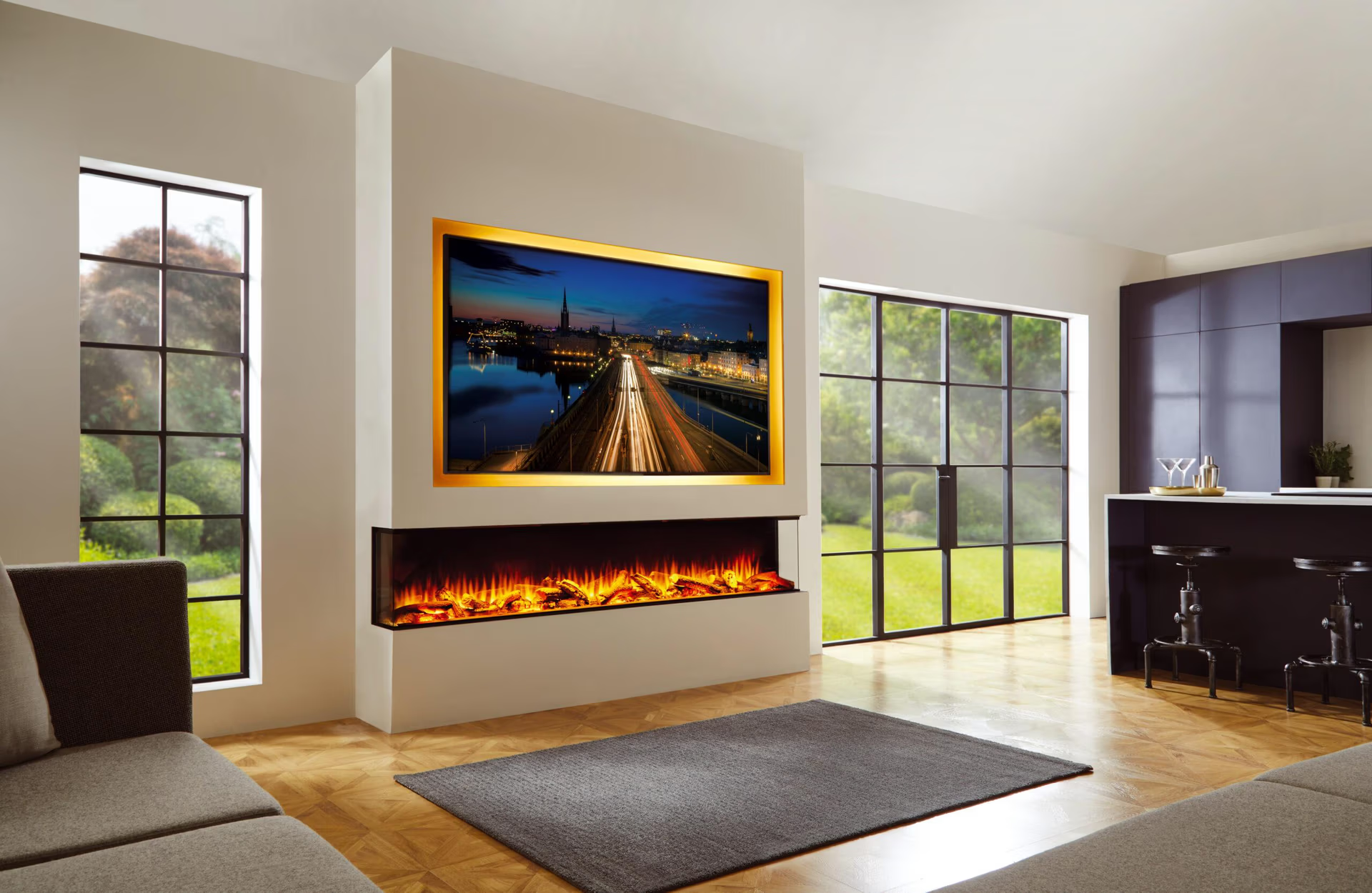
Quick answer: plan an electric media wall fire by starting with the room, not the fire. Measure the wall, check the television size and viewing height, think about sockets and cable routes, then choose a fire that suits the proportions of the space.
An electric media wall fire can make a plain wall feel finished. It can frame the television, hide cables, create a cleaner focal point and add flame effect without needing a chimney. The best results come from planning early. Fire width, television height, wall depth, sockets, viewing distance and finished materials all need to work together. If one detail is guessed too soon, the finished wall can look unbalanced even if the fire itself is a good product.
At Heatwave Fireplaces in Warrington, customers often arrive with a photo of a media wall they like. That is a useful starting point, but the room itself matters more: the wall size, furniture layout, socket positions and how the space is used every day.
Start With The Wall, Not The Fire
A wide electric fire can look impressive, but the room decides what will feel right. Before choosing a product, stand back and look at the whole wall. Check:
- the full width of the wall
- the ceiling height
- whether the wall is flat, alcoved or part of a chimney breast
- where the sofa or main seating position will be
- the television size and comfortable viewing height
- where sockets and cables are now
- whether the wall needs storage, shelves or a simpler finish
A good media wall should feel balanced from the main seat in the room. A fire that is too wide can make the television look squeezed. A television that sits too high can be uncomfortable to watch. Too many shelves and recesses can make the wall feel busy rather than calm.
Decide What The Media Wall Needs To Do
Some customers want a simple electric fire beneath a television. Others want a full feature wall with display shelves, lighting, cupboards, a soundbar or space for games consoles and media boxes. Those choices affect the structure before the wall is built, so it helps to be clear early. Ask yourself:
- Is the fire mainly for atmosphere, heat or both?
- Will the television be used every day?
- Do you need storage for equipment or controls?
- Do you prefer open shelves, closed storage or no storage?
- Should the wall look modern and minimal, or warmer and more traditional?
- Should the fireplace area still look good when the flame effect is off?
A simple flush wall and a storage led media wall need different planning. Both can work, but they should not be designed as an afterthought.
Balance The Fire And Television
The fire and television need to look like they belong together. A very wide fire can sit well beneath a large screen, but it may overpower a smaller room. A compact fire can be right for a narrower wall, but may feel lost if the television and wall are much larger.
Height is just as important. If the television is pushed too high to make room for the fire, the media wall may photograph well but feel uncomfortable in daily use. Bring these details to the showroom if you can:
- the television size, or the size you plan to buy
- the width and height of the wall
- the distance from the sofa to the screen
- photos of the full room, not just the fireplace wall
- any furniture that needs to stay in position
Plan Sockets, Cables And Access Early
Electric media wall fires need sensible planning around power, cables and future access. The fire, television, soundbar, lighting and connected equipment may all need their own route. This is not something to leave until the wall is almost finished. Poor planning can leave visible leads, awkward sockets or equipment that is difficult to reach later. Before building, think about:
- where the existing sockets are
- whether new electrical work may be needed
- where television and media cables will run
- whether equipment needs ventilation or access
- how the fire will be controlled
- how the wall could be checked or maintained in future
Always follow the product instructions and use suitable qualified trades where electrical or building work is required.
Ventilation matters too. A recessed electric fire produces heat that needs somewhere to go, so the cutout sizes, clearances and any vents should follow the manufacturer’s guidance for the exact model. This is one of the details we help you check before anything is built, so the finished wall stays safe and the fire performs as it should.
Choose A Finish That Suits The Room
The finish around the fire matters as much as the fire itself. A media wall can be painted, panelled, plastered or combined with fireplace materials, depending on the design route and the products chosen. A very modern room may suit a clean flush wall. A warmer living room may need texture, shelving or a more traditional fireplace influence so the media wall does not feel too stark.
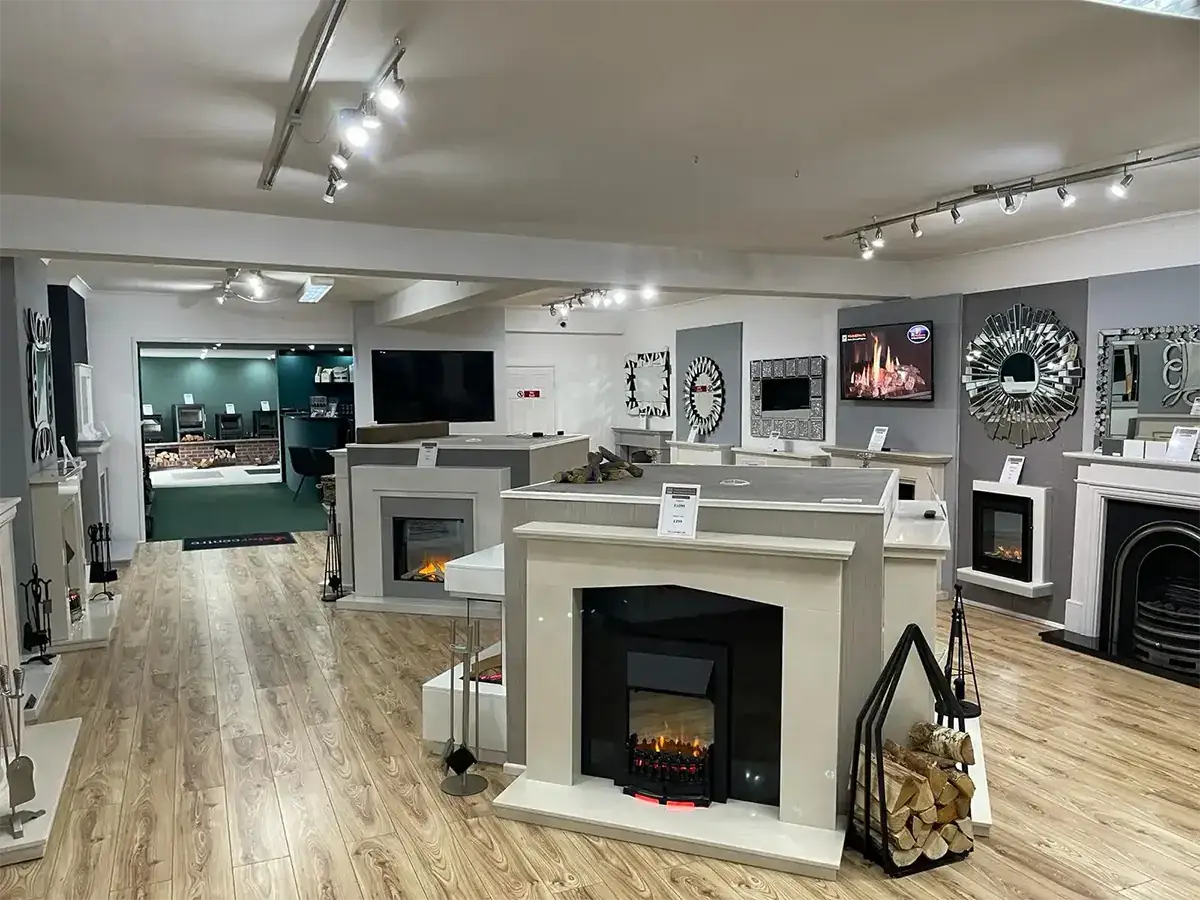
Seeing different fires and fireplace proportions in person can make those decisions easier. Heatwave’s Warrington showroom and Osnath Works showroom and factory are useful for comparing scale, finish ideas and made to measure fireplace options before you commit to the build.
What To Bring To The Showroom
The more room information you bring, the more useful the conversation will be. Rough measurements are fine for the first visit; they simply help narrow the options. Bring:
- photos of the full wall and surrounding room
- wall width and ceiling height
- rough socket positions
- television size or planned television size
- sofa position and viewing distance
- examples of media wall styles you like
- notes on whether you want shelves, storage, lighting or a simple wall
- any existing fireplace or chimney breast details
Why Planning Early Saves Problems Later
A media wall is a visible part of the room. Once it is built, changes can be awkward and expensive. Planning early helps avoid common problems such as a television that sits too high, a fire that is the wrong width, visible cables, poor access or a wall that feels too heavy for the room.
Good planning also helps you compare electric media wall fires properly. Instead of asking which fire looks best on its own, you can ask which fire suits the wall, the television, the furniture and the way the room is used.
Visit Heatwave Fireplaces In Warrington
If you are planning an electric media wall fire, start with the room and the proportions before committing to a product. Heatwave Fireplaces can help you compare electric fires and media wall fire options in person, then talk through the practical details that affect the finished wall.
Bring photos and rough measurements to the Warrington showroom, WA2 7XE, or call 01925 230045 if you would like to check what information will help before you visit.
Frequently Asked Questions
What should I measure before planning a media wall fire?
Measure the full wall width, ceiling height, rough socket positions and the distance from the main seating position to the television. It also helps to note the planned television size and any furniture that must stay in place.
Should I choose the electric fire or the television first?
It is best to plan them together. Fire width, television size, viewing height and wall depth all affect the finished result, so choosing one without the other can make the layout harder to balance.
Can an electric media wall fire go on any wall?
Not automatically. The wall needs to suit the chosen fire, television position, electrical route and finished design. Photos and measurements can help the showroom team advise what may be realistic.
Do media wall fires give heat or are they just decorative?
Many electric media wall fires include a heat function as well as a flame effect, but the exact output and controls depend on the chosen product. Confirm the product details before relying on it as a main heat source.
What should I bring to a showroom appointment?
Bring room photos, wall measurements, television size, seating distance, socket positions and examples of media wall styles you like. This helps the team narrow the options and spot planning issues early.
Can Heatwave help with made to measure media wall ideas?
Heatwave Fireplaces can advise on electric fires, fireplace proportions and Osnath Works options. The best route depends on the room, the chosen fire and the finish you want.
Which electric fires suit a media wall?
Inset electric fires designed for recessed fitting are the right choice, including the wide format models made for media walls. Not every electric fire is rated to be built in, so check the model before the wall is designed. The showroom displays include media wall fires running in realistic settings so you can compare widths and flame effects.
Do media walls need ventilation?
Many designs do. The fire’s manufacturer sets out the clearances and any venting the model needs, and the build should follow that guidance exactly. Bring the model details to the showroom and we will talk you through what the wall needs to allow for.
How long does a media wall take to build?
It depends on the design, the wall and the trades involved. A straightforward build is often finished within a few days once materials are on site, while larger designs with extra joinery take longer. Planning the details early is what keeps the build quick.
Visit us in Warrington
Heatwave Fireplaces, Osnath Works, Lythgoes Lane, Warrington, WA2 7XE. Call 01925 230045 or use the contact page to plan your visit.