

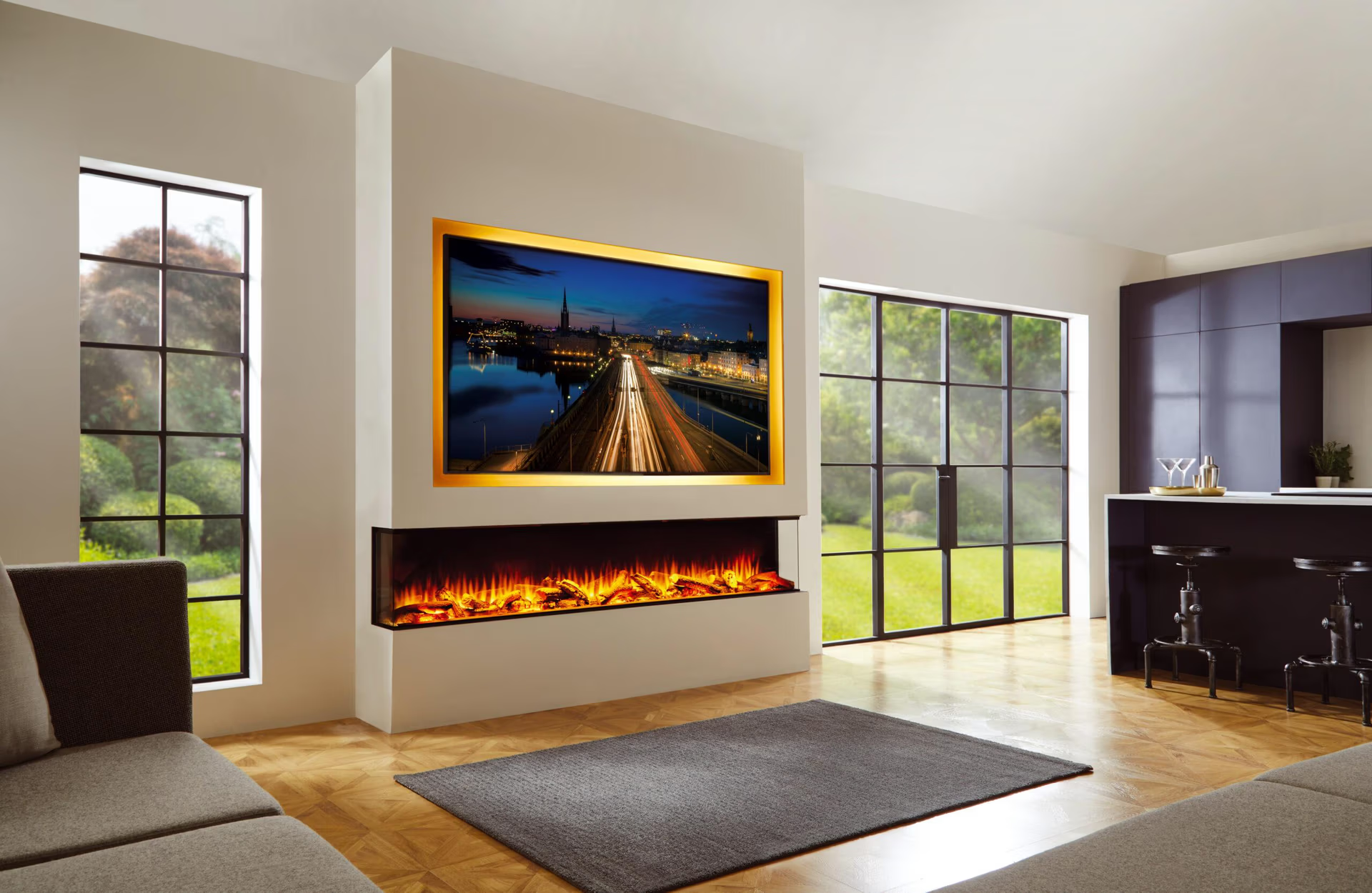
Not every home has a chimney. Some newer properties were built without one, some older homes have had fireplaces removed, and many extensions or flats do not have a simple flue route. That does not mean the room has to miss out on a proper focal point.
An electric fire can give you the look and atmosphere of a fireplace without burning gas, wood or solid fuel. It still needs to suit the wall, the room and the electrical setup, but the lack of a chimney is usually not the same barrier it would be for many other fire types.
At Heatwave Fireplaces in Warrington, customers often come in with one simple question: “Can I still have a fire if I do not have a chimney?” In many cases, the answer is yes, and the next step is choosing the right style for the room.
Why Electric Fires Do Not Need a Chimney
A chimney or flue is needed when a fire produces smoke or combustion gases that must be taken safely outside. Electric fires work differently. They use electricity for the flame effect and, on many models, an electric heater for warmth.
Because nothing is being burnt, there is no smoke, ash or flue gas to remove. The fire still needs to be installed in line with the product instructions, and any electrical work must be suitable, but you are not trying to solve a chimney problem before the design can begin.
That is why electric fires can be useful for:
- modern homes without chimney breasts
- flats and apartments
- extensions, garden rooms and open plan spaces
- bedrooms and occasional rooms
- rooms where an old fireplace has been removed
- media walls and new feature walls
Which Electric Fire Style Suits a Chimney Free Room?
The best option depends on how you want the room to feel. Some customers want a traditional fireplace shape. Others want a clean, modern wall with a wide flame picture. It helps to compare the main routes before deciding.
Inset Electric Fires
Inset electric fires are designed to sit within a recess, surround or prepared opening. They can work well when you want a more traditional fireplace look without using gas or solid fuel.
If the room does not already have a fireplace opening, the surround, recess and wall preparation need to be planned together. Photos and measurements make that conversation much easier in the showroom.
Wall Mounted Electric Fires
Wall mounted electric fires can suit flatter modern walls, especially where you want a simple feature without a full fireplace surround. The position still needs care, because the fire should look balanced with furniture, sockets, the television and the rest of the room.
Electric Stoves
An electric stove can be a good choice if you like the shape of a wood burning stove but do not have the chimney, flue route or solid fuel setup for one. Some customers pair an electric stove with a simple hearth or fireplace setting so the room still has a classic focal point.
Electric stoves are useful when you want a familiar fireplace shape, but the room is better suited to a chimney free electric product.
Electric Fireplace Suites
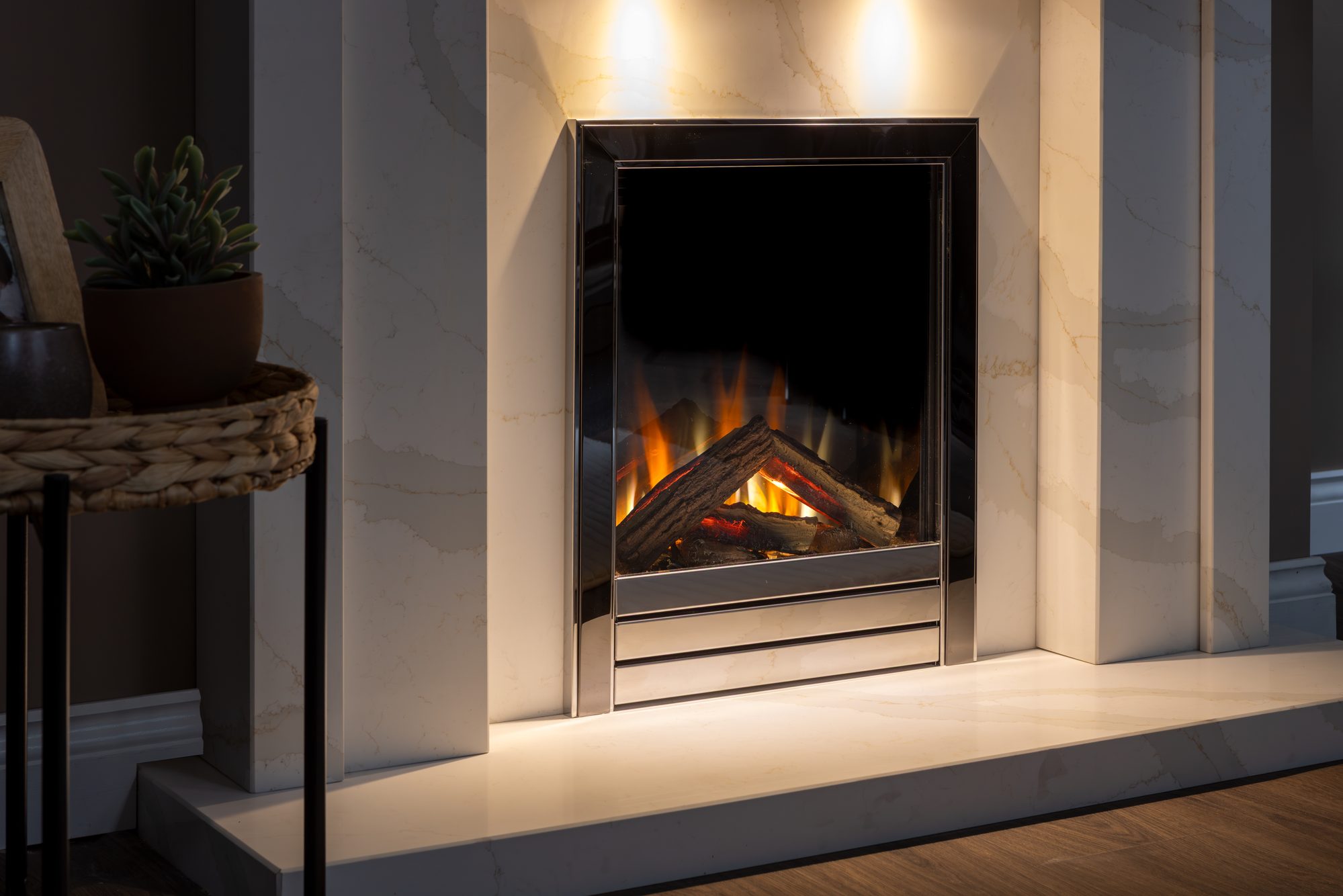
An electric fireplace suite combines the fire and surround as a finished feature. This can be helpful when you want the room to feel complete without designing every part separately. The important part is proportion: the suite should suit the wall width, ceiling height and furniture layout.
A compact electric fire can still feel like part of a proper fireplace when the surround, hearth and room proportions are considered together.
Electric Media Wall Fires
Electric media wall fires are popular in homes without chimneys because they can be built into a new feature wall with a television, shelving or storage. This route needs more planning than simply choosing a fire. The fire width, television height, sockets, cable routes and finished wall depth all need to work together.
What Should You Check Before Choosing?
Electric fires are flexible, but the room still sets the limits. Before choosing a product, think about:
- the full width and height of the wall
- whether the fire will sit on the wall, in the wall or within a surround
- where the nearest suitable electrical supply is
- whether the fire is mainly for atmosphere, heat or both
- the furniture layout and viewing angles
- whether you prefer a stove, suite, inset fire or media wall
- how the fire will look when the flame effect is off
A fireplace is usually a long term focal point, so scale matters. A fire that looks impressive online may be too wide, too small or too high once it is placed in your actual room.
Can Electric Still Feel Like a Proper Fireplace?
Yes, if the setting is planned properly. The fire is only one part of the finished look. The surrounding wall, hearth, mantel, suite, shelving or media wall can make the difference between a product placed on a wall and a fireplace feature that feels part of the room.
Heatwave’s Warrington showroom and Osnath Works showroom and factory can help customers compare scale, finishes and fireplace proportions in person. If a standard fireplace suite does not quite suit the room, made to measure fireplace options may also be worth discussing.
When Might Another Fire Type Be Better?
Electric is not the right answer for every customer. If you specifically want a real flame and the property has a suitable route, a gas fire may be worth discussing. If you want the experience of burning logs, a wood burning stove or multifuel stove has different requirements and will need the right chimney or flue arrangements.
The useful starting point is not just “which fire looks best?” It is “what does the room allow, and what do you want the fire to do?” For many chimney free rooms, electric is the most practical category to explore first.
What To Bring To The Showroom
You do not need a perfect plan before visiting, but a few details help the team give better advice. Bring:
- photos of the full wall where the fire may go
- wall width and ceiling height
- rough furniture and television positions
- photos of nearby sockets, alcoves or existing features
- examples of styles you like
- a note on whether the fire is for heat, atmosphere or both
Visit Heatwave Fireplaces In Warrington
If your home does not have a chimney, an electric fire may still give you the fireplace feature you want. Heatwave Fireplaces can help you compare electric fires, electric stoves, fireplace suites and media wall fires in person, then talk through the practical details that affect the room.
Bring a few photos and rough measurements to the Warrington showroom, WA2 7XE, or call 01925 230045 if you would like to check what information to bring before you visit.
Frequently Asked Questions
Can I have an electric fire if I do not have a chimney?
Yes. Electric fires do not need a chimney or flue, so they are often suitable for homes where a traditional fireplace route is not available. The wall, product and electrical setup still need to be suitable.
Do electric fires need a flue?
No. Electric fires do not burn gas, wood or solid fuel, so they do not need a flue to remove smoke or combustion gases.
Can an electric fire go on any wall?
Not automatically. The wall needs to suit the fire type, fixing method and electrical position. A showroom discussion or installer check can help confirm what is realistic.
Are electric media wall fires suitable for homes without chimneys?
Yes, they are often used in chimney free homes. The fire, television, sockets, wall construction and finished proportions should be planned together before work starts.
Can an electric stove replace the look of a wood burning stove?
An electric stove can give a similar visual focal point, but it is not the same experience as burning logs. It may suit customers who like the stove look but do not have a suitable chimney or flue route.
Should I choose an electric fire, gas fire or stove?
That depends on the property, fuel options, chimney or flue route, room design and how you want to use the fire. For a room without a chimney, electric fires are often the most flexible starting point.
Need Help Choosing An Electric Fire?
Visit Heatwave Fireplaces in Warrington to compare electric fires, electric stoves, fireplace suites and media wall options in person.